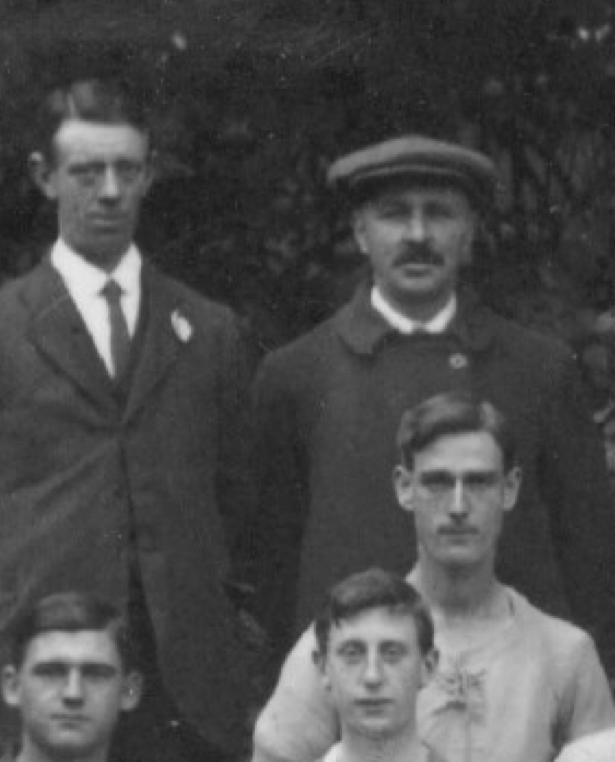
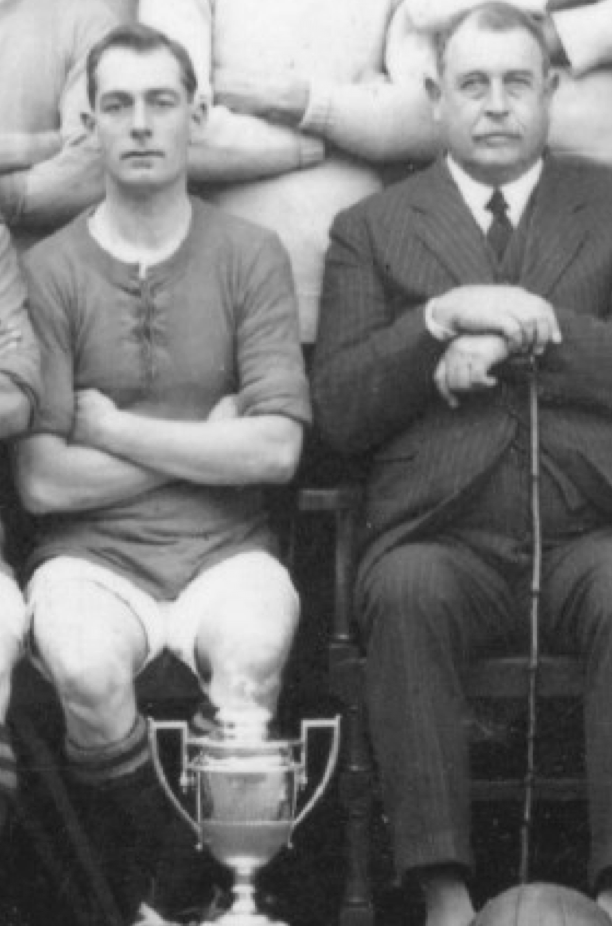
George Godfrey Clothier 1893 – 1978
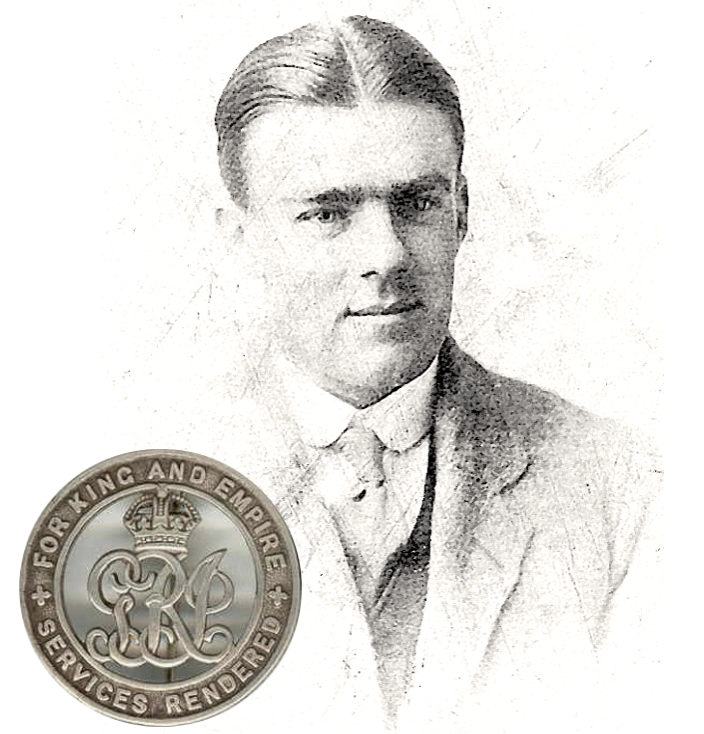
George Clothier 1893 – 1978
These notes have been kindly provided by Peter Hannah
George Godfrey Clothier was born on the 26th July 1893 at East Fields, Mitcham. I’m not sure if this East Fields was part of a hospital as the family were living at 15 Sibthorp Rd, Mitcham at the time. He was the third child to Edwin Joseph Clothier (1865-1926) & Sarah Ann (Bryant) (1868-1941) the other siblings were, Percy Edwin (1889-1970) Daisey Beatrice (1891-1982) Victor Ralph (1897-1898) Walter Cecil (1895-1982) & Harry Robert (1901-1958)
Like his father, all his brothers and his brother in law, he worked at Mitcham Gas Works. He was also involved on the Executive Committee of Mitcham Wanderers F.C. His father was Vice President and his brother in law, Richard Cooper was club captain.
1st World War
George enlisted on the 6th November 1914 at the age of 21. He was assigned to the 2/5 Battalion, East Surrey Regiment and given his Regimental Number 2686. He progressed and at some point was promoted to Corporal and served for 1 year 208 days before he was discharged, however he never saw active service in France or anywhere else.
His war records indicate that in April 1915 he was out on manoeuvres, running, when he fell damaging his ankle. Whether or not it was broken is not known. My mother always stated that the treatment he received was inadequate and after patching him up he was sent back for active service. However he struggled for a year before he was admitted to Tooting Military Hospital on the 1st April 1916, where he remained until the 10th July 1916. Whilst there they obviously discovered that there was a greater problem and by then gangrene had set in and he had to have his right leg amputated just below the knee.This obviously led to his discharge from the army and his discharge papers confirm that this took place prior to leaving hospital and are dated 31st May 1916. The following two pages has copies of this document, his Major, confirming that he was “strictly honest, sober, tactful in his dealings with his men and very hardworking. His further promotion was only retarded owing to his lameness”
George was awarded the Silver War Badge, No. 65319 on the 3rd January 1917. These badges were issued to soldiers who had been discharged on account of age, wounds or sickness which would render them permanently unfit for further service. The badge was almost a defence against women as if a man was thought not to be in one of the services they would give him a white feather to show he was a coward. So this badge was designed for the civilians who had once been in the army but discharged. The badge meant they could not be called a coward, they would have had a reason for not being in the war. The badge was worn on the right breast whilst in civilian dress, it was forbidden to wear on a military uniform.
George wore his with pride on his jacket, and this photograph also shows this badge. Unfortunately the original badge was stolen in a burglary sometime in the late 1990s.
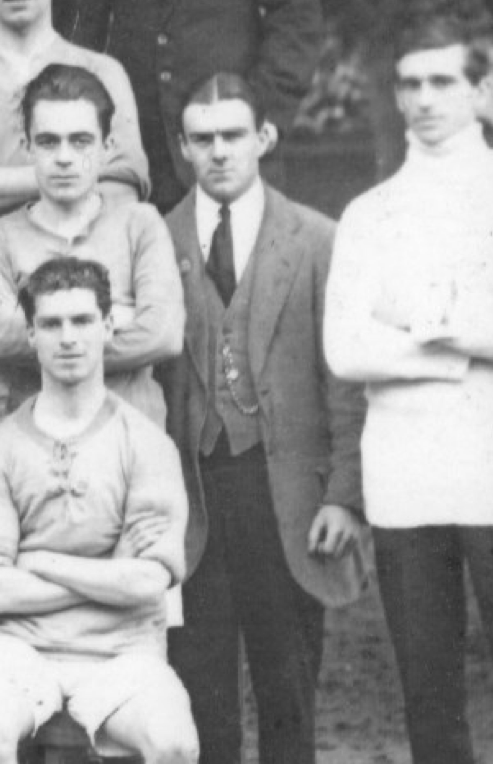
This photo of George Clothier is a clip from href=”http://photoarchive.merton.gov.uk/view/50758″ target=”_blank”>Merton Memories photo 50758 , copyright London Borough of Merton.
From Peter Hannah:
George, on right in suit jacket and waist coat with hair parted in the middle. This jacket is the same one as our photograph with him wearing his Silver War Badge, which can also be seen in this photograph.
Richard Arthur Cooper (George’s brother in Law) aka. Nudger and Team Captain is the player sitting on the right hand side of the President (front middle)
Edwin Joseph Clothier, the Vice President is quite possibly the man at the back, second on the left with the flat cap.