From
Mitcham News & Mercury
12th May, 1933
“The Manufacture of Gas” was the subject of a very interesting address given, at the weekly meeting of the Rotary Club of Mitcham, held on Monday at the “White Hart” Hotel, Mitcham.
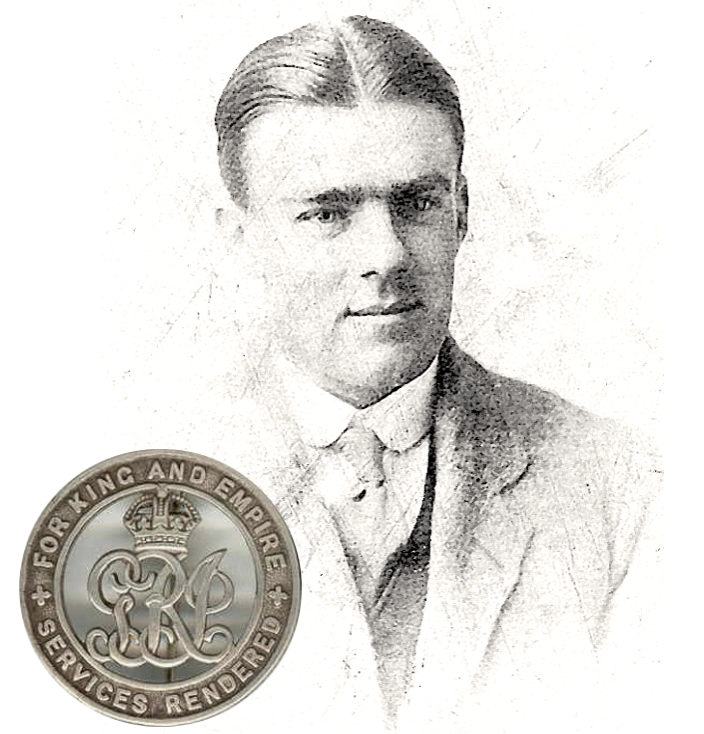
The speaker, was Rotarian Edward Pellew-Harvey, of the Wandsworth and District Gas Co., and a member of the Mitcham Club, and he explained that the art of coal gas manufacture is considerably over a century old.
After dealing with the history of the production of coal he said that at the present time In the United Kingdom alone there are some 1,700 separate concerns promoted for the manufacture a gas. Of these 931 are operated under statutory powers, some 619 being owned by companies and 313 by local authorities. The capital employed by the statutory concerns is approximately £140,000,000. The total annual production of gas in the United Kingdom is approximately 300,000,000,000 cubic feet, which is distributed to 8,000,000 individual consumers through 40,000 miles of street mains.
MITCHAM’S RETORTS.
The following is briefly, he added, the process of gas making. The coal is placed in numerous hermetically sealed fire clay or silica containers called retorts which are heated to a temperature of approximately 2,000 degrees F. by a mixture of furnace gas and air, which circulates round the retorts. There is practically no limit to the number of retorts used. At the Mitcham Works there are 192 working continually, each retort containing 12 cwt of coal, which remains in the retort for 12 hours, after which all the gas has been extracted from the coal, and approximately 9 cwt of coke left. Another charge is placed in the retort, which again remain for a period of 12 hours. From the foregoing figures it will be seen that at the Mitcham Works approximately 200 tons of coal per day are used for gas production.
Subsequently the gas is drawn away by means of a rotary pump, called an exhauster, through a series of condensers, which cool the gas to atmospheric temperature, and in so doing a portion of tar is recovered in the form of the dark thick liquid which is well known. From the condensers the gas travels through a series of cast iron or
steel rectangular vessels known as scrubbers, where, by washing, the ammonia is released, the final liquid, consisting of water and ammonia, being termed ammoniacal liquor.A POISONOUS GAS.
From the scrubbers the gas passes through a series of cast iron boxes filled with oxide of iron, or ferric oxide, which extracts the sulphurated hydrogen. This gas being a poisonous one, has by law to be totally eliminated from the finished gas. The gas cleaned and purified, is now ready for use by the consumer, and is then metered and stored in the gas holder until required.
One ton of coal carbonised at a gas works yields coal gas, and the following main by-products, which in turn yield many valuable constituents. By distilling chemically the various oils contained in crude coal tar the following products are obtained: Dyes, perfumes and essences, explosives, chemicals used in medicine and surgery, such as anaesthetics, antiseptics and disinfectants; aperients, laxatives and emetics; photographic chemicals; wood preservatives, benzol, etc.
The cost of soot to the nation is tremendous. Manchester’s laundry bill, for instance, is £290,000 a year more than it would be if the air were clean. During heavy fogs, intensified by smoke, traffic is disorganised; in 27 days of fog during recent rears the ‘buses lost 400,000 working miles. But the damage which is most obvious to the general public is that done to our buildings. Soot and acid in the air involve the country in an expenditure of about £120,000 a year on the repair of Government buildings alone. It Is estimated that in London the financial loss due to smoke is nearly £7,000,000 a year.
Britain’s brightest days in recent years continued the speaker, were during the coal strike of 1926, when the air became clearer and purer than it has been observed within living memory. The fact is worth recalling, for today of the 33,000,000 tons of coal burned in Britain every year for domestic purposes about 3,200,000 tons pollute the air in the form of smoke and soot.
Smoke and soot are easily preventable, and the responsibility for polluting the air lies with each citizen. By taking advantage of the use of a smokeless fuel we can individually set a example, and to that extent give the sun a sporting chance of transmitting to us its health-giving rays. It is now a well-established fact that the ultra-violet rays of the sun, which are essential to our well-being, are shut up by the smoke clouds which hover continually over our big cities. On every square mile of our large towns there is a continuous soot fall, amounting in some cases to an annual deposit of hundreds of tons.
EMPLOYMENT GIVEN.
The magnitude of the industry may be judged by the following figures:
113,000 people are regularly employed in the gas industry;
the capital invested in the industry is about £200,000,000.
18,000,000 tons of coal are carbonised annually in British gas works;
the production of this coal gives employment to about 67,000 mine workers;
10,000,000 consumers regularly use some 1,000 million therms of gas a year;
50,000 miles of mains carry this fuel unfailingly to them;
7,000,000 British housewives cook by gas;
three out of every four doctors all over the country use gas fires;
four out of every five nursing homes and three out of
every four hospitals use gas for heating;
altogether the medical profession accounts for about 100,000 gas fires;
3,000 trades use gas for an average of seven processes in each;
the by-products obtained yearly from British gas works include 12,000,000 tons of coke, 120,000 tons of sulphate of ammonia, 215 million gallons of tar.The speaker concluded by inviting the members of the club to visit the gas works at Mitcham on May 27.
Rotarian C. H. Parslow tendered thanks to the speaker for his excellent address and on behalf of the club accepted his kind invitation to visit the works of the gas company. Rotarian Riley Schofield presided, in the absence of the president, Rotarian Isaac H. Wilson, who was attending the Rotary Conference at Scarborough in company with the two vice-presidents, Rotarians Gauntlett and Cole.
The chairman welcomed guests from Wallington and Croydon Clubs.