Tag Archives: 1960

Home Radio

Shop that was established at 187 London Road (opposite Eagle House), in 1946 by brothers Alan and Colin Sproxton, using their service gratuities. The name “Home Radio” was suggested by their father.

September 1947 – the shop at 187 London Road, and their van. From the in house magazine of Murphy Radio Co., the Murphy News.


In 1955 Colin Sproxton took part in the Monte Carlo Rally.

Colin Sproxton in 1959 at the Monte Carlo Rally. Clip from Merton Memories photo reference Mit_​People_​124-1, copyright London Borough of Merton.


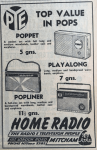
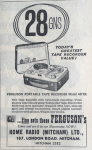
Home Radio initially sold electrical appliances, as shown in these adverts from 1960.


The business grew with selling components by mail order. According to an article in The Radio Constructor magazine (pdf), Home Radio and Mitcham became known all over the world.

Colin Sproxton retired in 1964, the year of this catalogue cover:
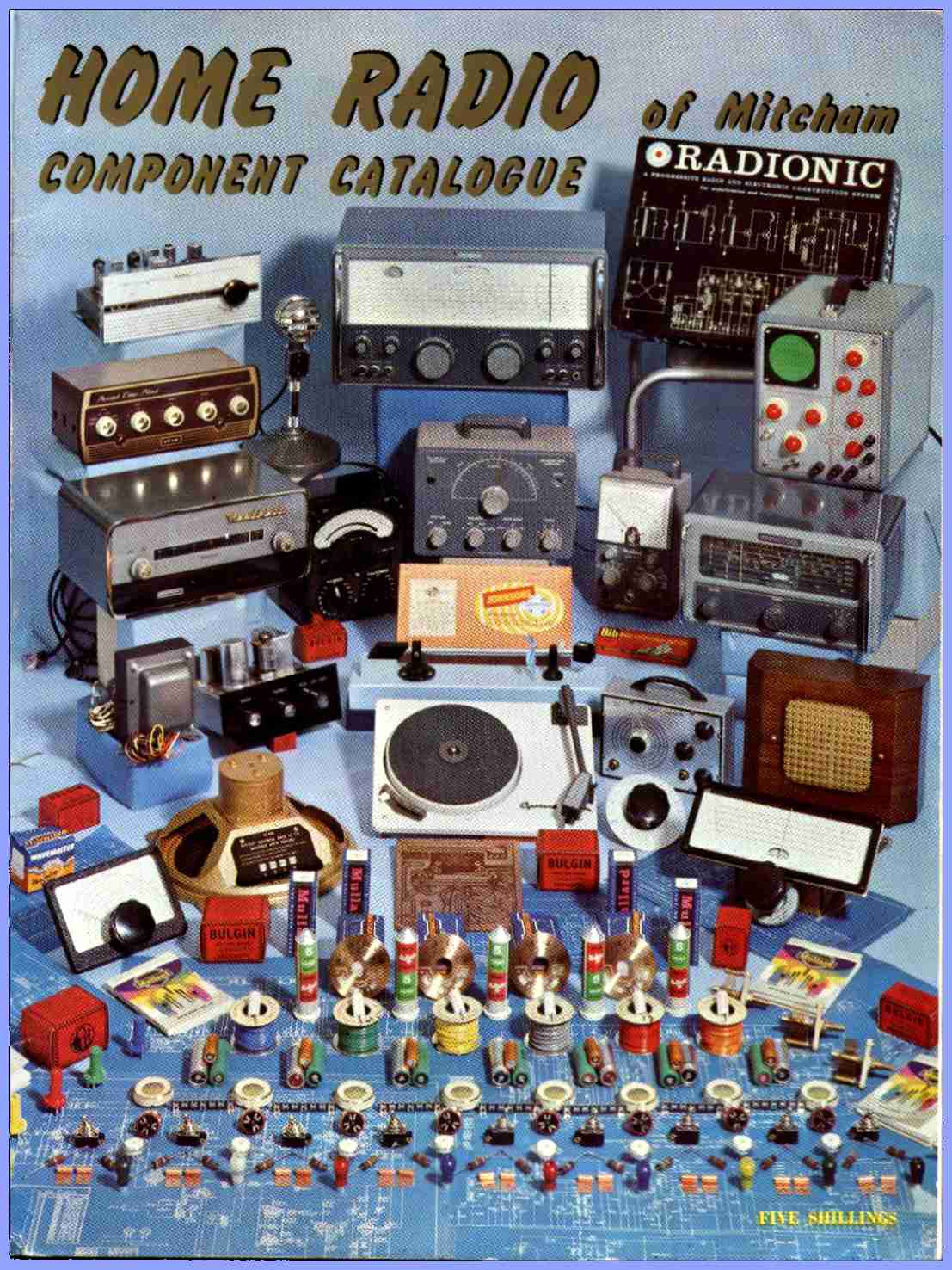
1964 Home Radio catalogue

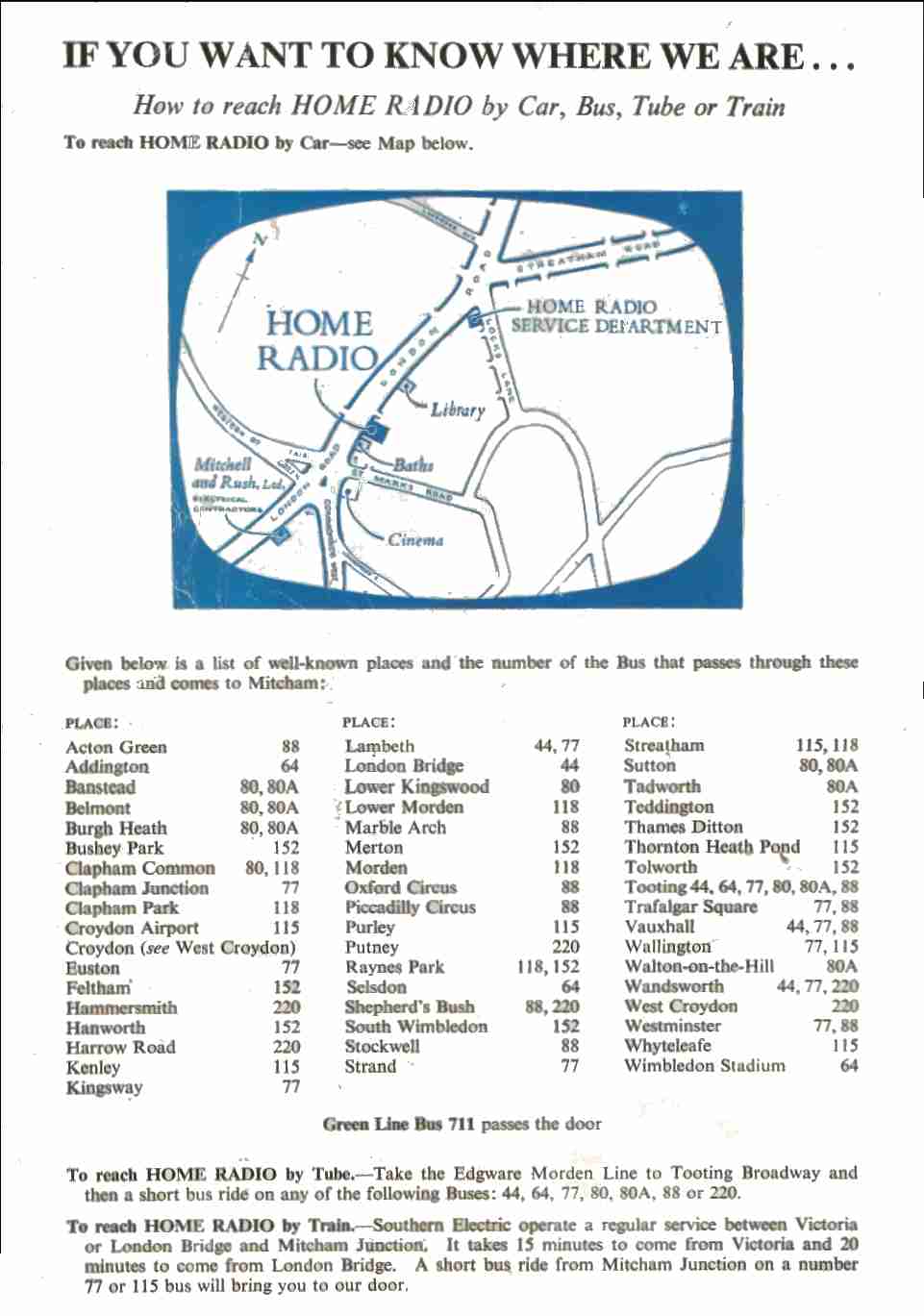
The back cover of this catalogue showed how to get to their shop by public transport. The map also showed their service shop in Locks Lane.
Their 1968 components catalogue, was advertised in Practical Wireless magazine, and said that it was:

Used and acclaimed by scientists, engineers, technicians, teachers & students
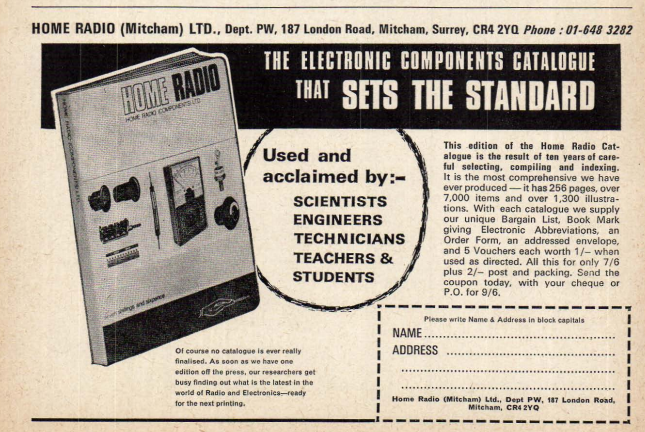
1968 Practical Wireless magazine ad

In 1969 they moved to larger premises to cope with the need to store large amounts of components for the mail order business. They went to the top floor of a new office block at 234 – 240 London Road, which gave them 2,400 square feet of space. The business was being run by Alan Sproxton and Ernest Layton at this time.

The Radio Constructor magazine described the dinner that was held at The Grange on 23rd April 1969 to celebrate the expansion of the business. A guest at the dinner was an old friend of the Sproxton family, Mr B. Mund Hopen from Bergen in Norway, who was in charge of the Norwegian Shipping Mission during World War 2. Mr Sproxton, in his after-lunch speech said that it was his opinion that three things saved Britain from defeat: radar, the tenacity and courage of the RAF, and the Norwegian tanker fleet which came over to Britain.


The company was wound up in 1982, as recorded in the London Gazette:

HOME RADIO (COMPONENTS) LIMITED

“That it has been proved to the satisfaction of the Company that this Company cannot, by reason of its liabilities, continue its business and that it is advisable that the same should be wound up; and that the Company be wound up and that Keith John Chapman of 1-2 Pudding Lane, London EC3R 8AB, be and is hereby appointed as Liquidator of the Company for the purpose of such voluntary winding-up.”

A. Sproxton, Chairman

1960 : Mitcham Firm Helps Solve A London Traffic Problem

30th September, 1960

Mitcham Firm Helps Solve A London Traffic Problem

The skill and precision workmanship of a local firm of constructional engineers —T. W. Palmer and Co. (Merton Abbey) Ltd., of Merton. Abbey Ironworks in Church Road, Mitcham — has been utilised to say “goodbye” to a passenger traffic problem at the Bank Station, Waterloo and City Railway (British Railways — Southern Regions) where at present during the morning rush period, approximately 40,000 passengers have to climb the long sloping walkway about 300ft. long. In the evening rush period, the traffic is in the reverse or “Down” direction.

The existing long sloping walkway, which has a series of steps at intervals, has long been nicked-named the “Drain.” During the rush period the “Drain” becomes almost choked with the moving mass of city workers but this picture will undergo a radical change when the passengers step on one or the other of two new design OTIS TRAV-O-LATORS.

T. W. Palmer, and Co. were responsible for the fabrication, to the design of Otis Elevator Company, of the two steel trusses which combine relative lightness with great strength.

Each truss is an intricate welded lattice girder, of light box section in form, and comprises one upper and one lower sections for the inclines, thirteen l8ft. standard incline sections, two variable
sections and frames for the upper and lower handrail drives.

The two steel trusses or structures, with flitted bolt splices, weigh about 33 tons together. Extreme accuracy of manufacture was essential and was achieved. Each TRAV-O-LATOR has a series of moving platforms, constructed from die cast aluminium with close spaced cleats to provide a good foothold. The platforms are provided with ample diameter wheels and are connected with a pair of continuous chains which surround the structural track system.

The change in angle of the platforms as they follow the track contour is almost imperceptible and, to reduce the danger of tripping as passengers step off the moving platform, each fixed landing is edged with a combplate which meshes with the close spaced cleats.

The distance travelled from the Lower Landing Combplate to the Upper Landing Combplate is about 325ft.

At full speed the TRAV-O-LATORS will travel at 180ft. per minute but provision has been made for the speed to be reduced automatically to 90ft. per minute should traffic conditions require this. A speed of l8Oft. per minute coincides with the fastest escalators on the Underground Railway Stations for London Transport Executive.

Source: Mitcham and Colliers Wood Gazette
30th September, 1960