An ICL 2904 mini-mainframe was installed at Downs Surgical Ltd., Church Path, around 1978.
The company had previously used two Honeywell computers: a 716 and a 2020. Both were batch processing machines, with no interactive terminals. The ICL 2904 came with direct data entry terminals for fast entry of orders, and also Multi-Access terminals, for which an online Sales Order Processing system was written in COBOL. The ICL 2904 operating system including a terminal message routing system and a ‘riro’ file for ‘rolling-in and ‘rolling-out’ large Transaction Processing programs.

The main computer room. The three units on the left were EDS60 disc drives. A disc pack holding 60 megacharacters could be mounted on the drive. On top of the drive are the empty disc pack cases. At the far wall are two magnetic tape decks. Spools of tape were mounted on these decks for backup purposes.
The ICL 2904 computer was based on the ICL 1900 series of computers and used a six-bit character instead of the 8-bit byte used today. This meant that the character set did not have lower case letters. The EDS60 drive, ‘Exchangeable Disc System 60’, would hold up to 60 million of these six-bit characters. One of the drives had to be online when the computer was started as it contain the ‘boot’ system. The other two drives could be used for other programs. Typically during the day they would hold the indexed sequential orders file that was updated from the terminals using the Sales Order Processing system. In the evening other disc were put online to perform batch processing. Backups were taken to magnetic tapes.
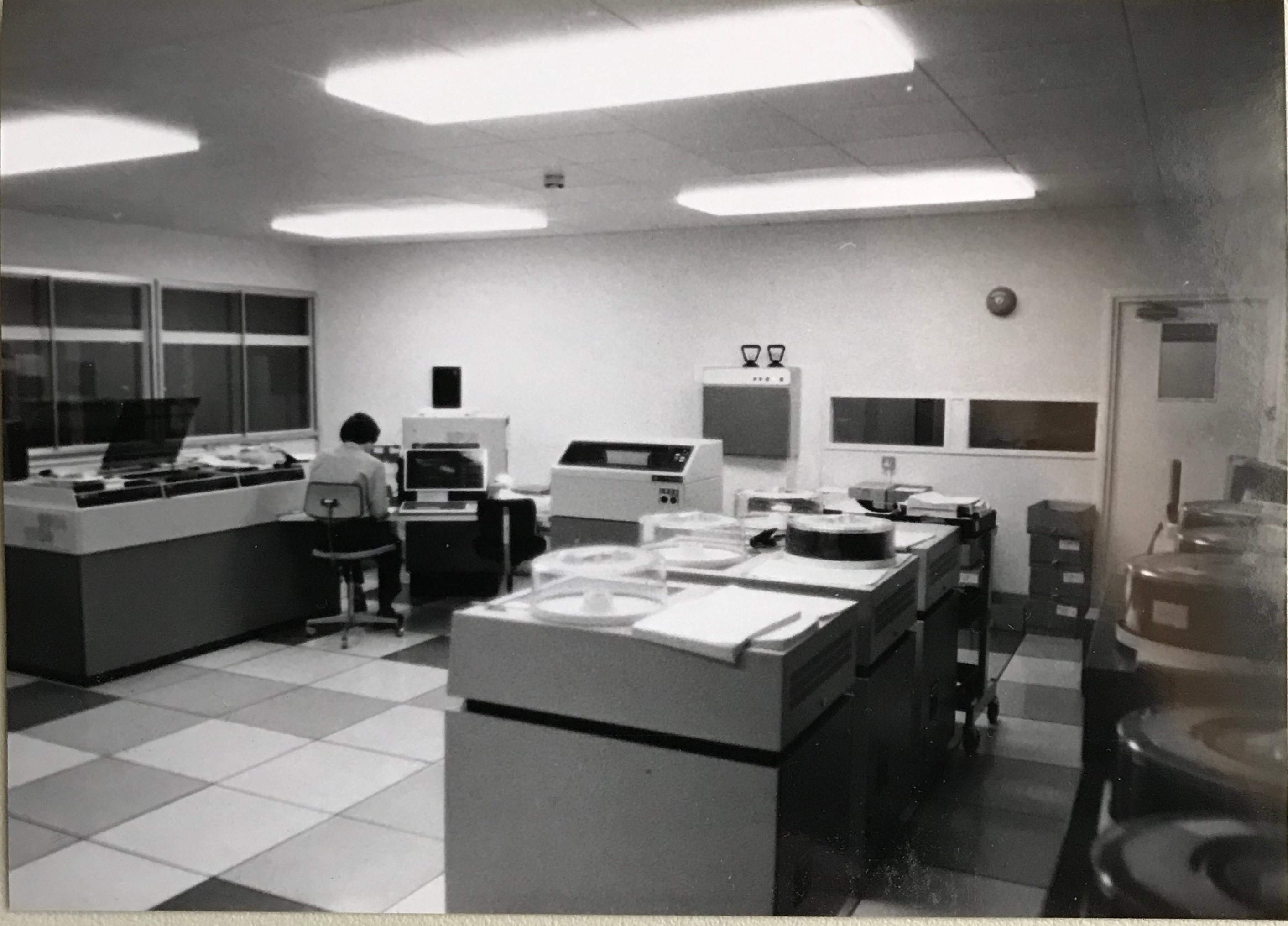
The ICL 2904 computer as seen from the other side of the machine room. The operator sat at a video terminal or console in the centre. On his left was a teletype printer that printed a hardcopy of the displays on the console; also a slow card reader for input of batch processing jobs. In addition there was a FEDS 5 disc drive that had a fixed 5 megachacter disc, with an exchangeable 5 megacharacter disc on top. To the right of the operator’s console was the main system printer.
The operating system used disc based spooling of output from batch programs. This meant that as batch jobs finished their output was written to file for printing later. The operator controlled what printouts were then spooled from disc to the printer, as he might also have to change the stationery, e.g. invoices etc. In the event of a failure with the printer this spool file could be taken off site to another ICL 2904 customer to use their printer. Heron Suzuki in Beddington Lane was frequently used for this purpose.
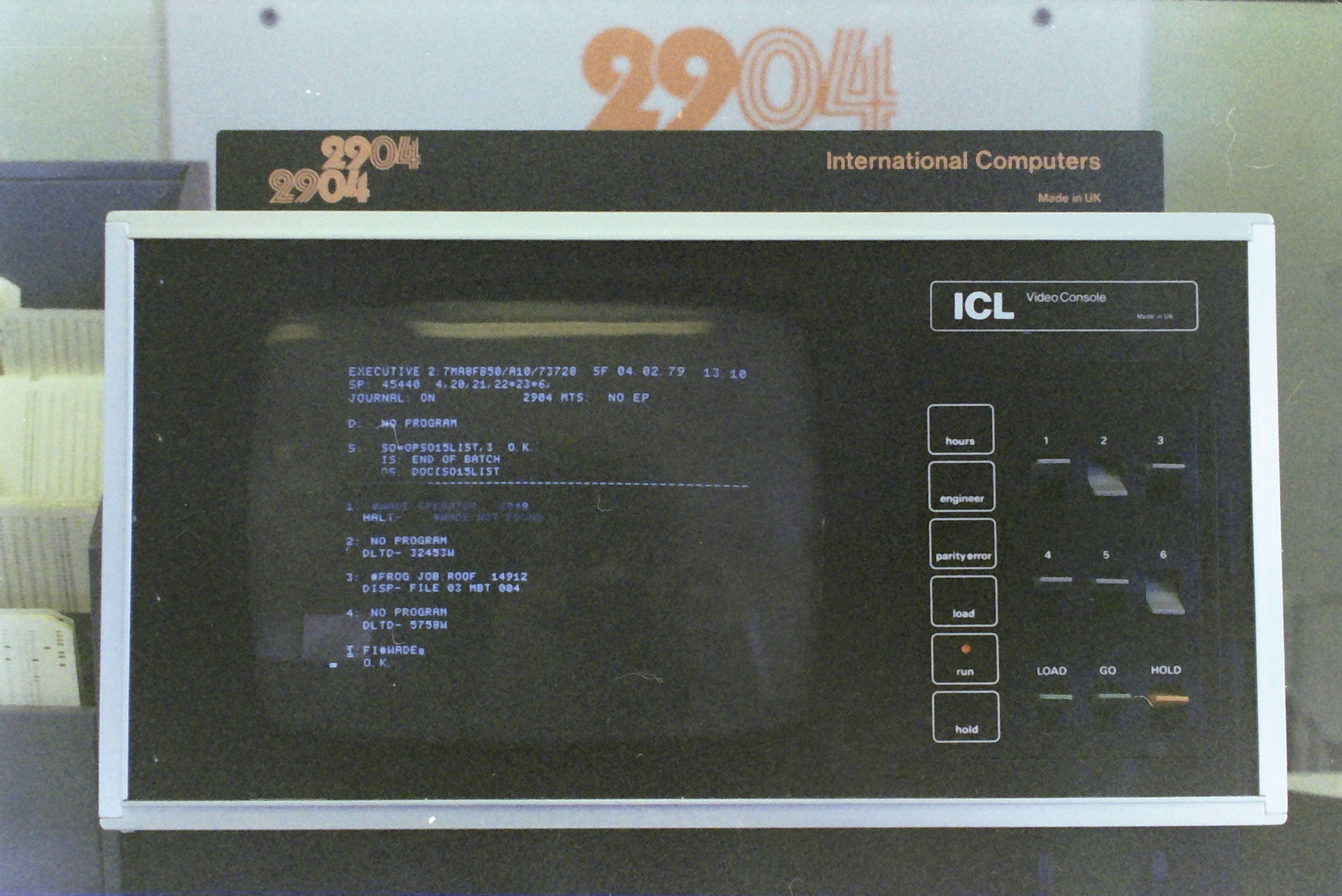
Operator’s Console. Photo taken Sunday 4th February 1979.
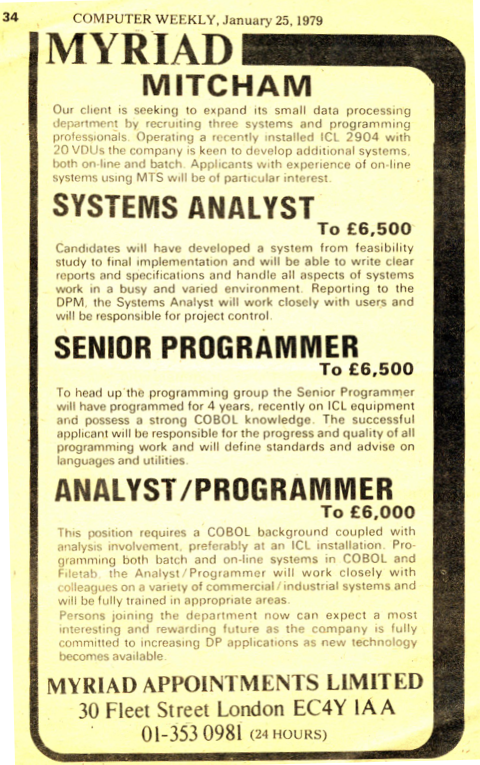
Advert in Computer Weekly on 25th January 1979 for more computer staff to work with the ICL 2904.
An operator was recruited with ICL 1900 series experience to work on the 2904, and was paid £3,600 per year.
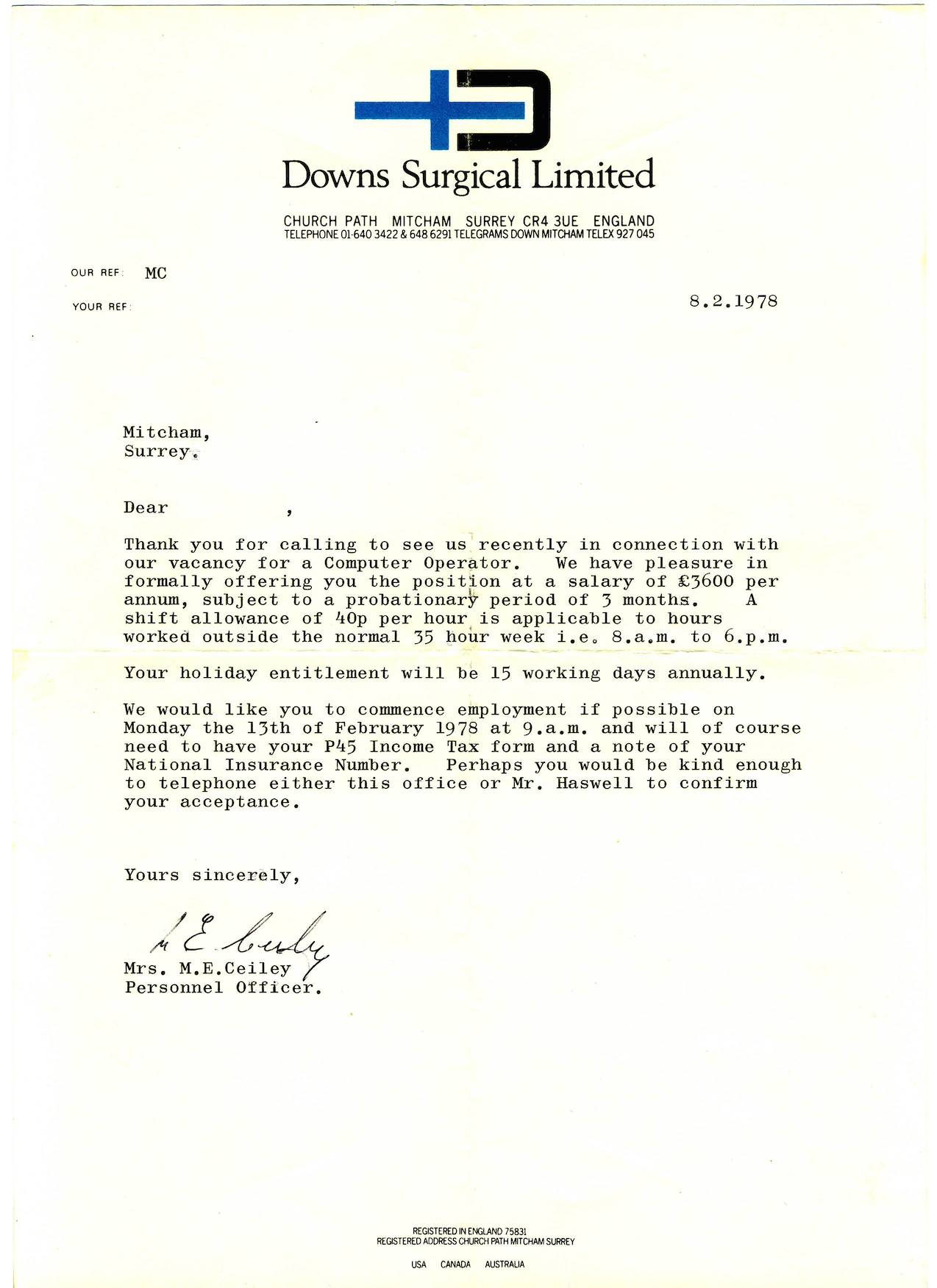
Operator job offer dated 8th Feb 1978

 Mitcham History Notes