From The Mitcham News & Mercury, 29th September, 1944, page 4:
SIR ISAAC H. WILSON
Death of Benefactor of MitchamREGARDED WEALTH AS AN
OBLIGATIONMitcham mourns the death at the age of 82 of Sir Isaac H Wilson, The Birches, The Cricket Green, a well-loved personality whose generosity has brought lasting benefits to the people of Mitcham.
Sir Isaac died on Tuesday in the Wilson Hospital, his £120,000 gift to the borough, which with Cumberland house and Mitcham Garden Village remain lasting testimonies to the spirit of a man to whom wealth was regarded as an obligation to the less fortunate rather than a privilege to himself.
In fifteen years his benefactions to the borough have been in the neighborhood of a quarter of a million pounds, but his greatness of heart was something not to be measured in terms of money. He was not a rich man who gave of his wealth has a salve to conscience. Certainly he felt it a duty to spend his money well, and the only return he asked was the increased happiness of the people. Although he has done more for Mitcham than any other man, he was loved for his own sake rather than for his gifts. He was simple kind and modest; he hated publicity, and did not care for constant reminders about the good he had done his adopted town.
QUIET DAILY VISITS
He liked a quiet life, and latterly since ill health had restricted his activities his greatest pleasure was to visit the Wilson Hospital and Cumberland House, a thing he did almost daily when his health permitted. He was the most welcome of all visitors at both places. There was no member of the staff who was not pleased to see the familiar figure coming up the drive, for if his step was slower of recent years, he had always a smile for his friends, and a happy twinkle in his eye.
Much has been written of Sir Isaac’s romantic rise from his obscure native village of Milton, Cumberland to a position of wealth and influence in the world. He was the youngest and only surviving member of a family of four brothers, sons of a yeoman farmer, who went out into the world to seek their fortunes in the building trade, and then spent the fruits of their labours on charity. They spent their youth working on their father’s farm, and later Sir Isaac became a draper’s apprentice.
BUILDING DEVELOPEMENT
He left the drapery business to join his brother, Joseph, in London where the two brothers developed large areas of Fulham, Mitcham and Tooting Junction. The other two brothers, Thomas and John, made fortunes building working class houses in Newcastle, and when they died Sir Isaac inherited several hundred thousand pounds.
The Wilson Hospital, the foundation stone of which was laid by his first wife, who was also a native of Cumberland, was Sir Isaac’s first benefaction to the borough. In November, 1928, it was opened by the Princess Royal. Later Sir Isaac enlarged the hospital adding two wings and installing up-to-date equipment.
THE GARDEN VILLAGE
On part of Cranmer green he built Mitcham Garden Village, the replica of his native Village, where the borough’s old inhabitants may live rent free. His next to gift to Mitcham was Cumberland House, the modern convalescent home at the rear of his own home which cost £60,000. This has been taken over by Surrey County Council. The cost of upholding the home by voluntary methods would have been an enormous charge on Mitcham, and Sir Isaac agreed that the best scheme was for the County Council to accept responsibility. Sir Isaac assured the future of the Wilson hospital by conveying to the trustees property in the district to the value of £45,000 as an endowment for the hospital. He also gave a home for the nurses.
Mitcham was not the only recipient of his generosity. His native village of Milton and neighbouring districts benefited by more than £20,000 from his generosity. This was spent on building cottages for the poor.
The death of his only daughter a considerable time ago was a great grief to Sir Isaac. Later he lost his wife, who, he said, had been the inspiration of the gift of the hospital. His only granddaughter, Mrs Black, lives on the Cricket Green, a few doors from Sir Isaac’s own home. Hs two grandsons are serving with the Forces.
CHURCHMAN AND CONSERVATIVE
For many years he played a prominent part in the town’s life. Earlier in his life he took an active interest in St. Barnabas Church where he was a churchwarden for some time. He was a staunch Conservative and for a time was president of the local Conservative and Constitutional Club. He was a keen educationalist as well as a Justice of the Peace until recently. For some time he was Chairman of the Mitcham Bench.
Formerly a member of Surrey County Council he was also a member of Mitcham Council until last year, when failing health caused him to relinquish many public posts.
In 1937 he became a Freeman of Mitcham, and in June, 1939, was knighted for political and public service in Mitcham.
Sir Isaac accepted honours gracefully, and continued his work in the same efficient and unassuming way.
A GREAT READER
For years Sir Isaac has been Mitcham’s best friend. He invested his money in the borough’s happiness, and both he and the people have drawn generous dividends. His figure, familiar to all who frequent the Green, will be sadly missed. He lived a simple life and of recent years rarelt went out of the borough.
His chief recreation was reading, and for the last ten years he has read little other than books about millionaires, successful businessman and industrialists, or men who, like himself, had risen from obscurity to a place in the world. Following The Fortunes of Lord Nuffield, Henry Ford, the Cadburys and others, he sought comparisons with his own success, and compared their manner of spending their fortune with his own.
The bombing of the Wilson Hospital, which was closed for some time, was a great blow to him, and the town will be glad that he lived to see it repaired and at work again.
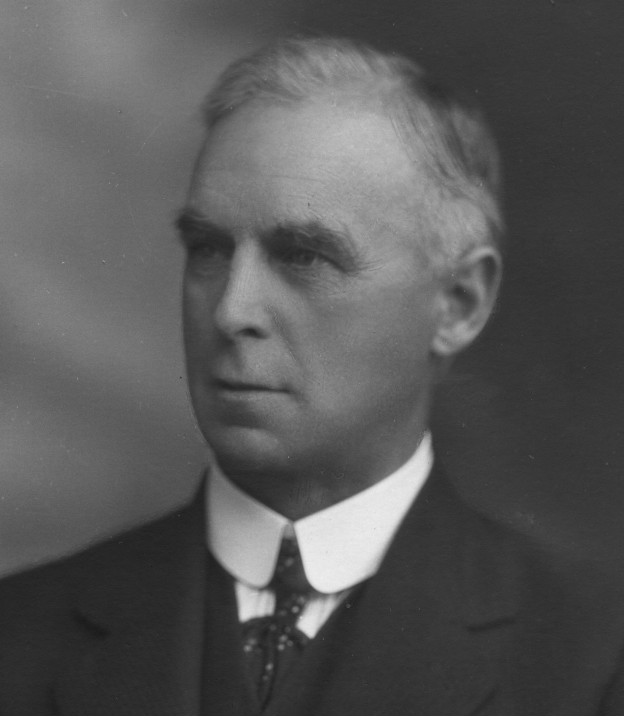
Sir Isaac Wilson
 Mitcham History Notes