Tag Archives: 1956

Raising the Ale Garland

Raising the ale garland was an old custom that was revived by Youngs Brewery when they reopened rebuilt, or repaired, pubs after the Second World War. This was done when the Cricketers pub was reopened officially on 8th January 1956 for example.

A letter to the Illustrated Sporting and Dramatic News, published on Wednesday 2nd January 1963, explained the custom:-

SIR,

— When a new inn was opened in Bristol earlier this year, the ancient custom of hoisting the ale-garland was observed. The accompanying photograph shows the garland hanging over the door of the house.

The custom has links with the Romans, who used a bush as their sign to advertise a tavern. Other references to the garland or bush are found over a long period of literature. For instance in 1603 a traveller records that he “spied a bush at the end of
a pole (the ancient badge of a country ale house ) “.

It is from this custom that the saying arose, “good wine needs no bush” —i.e., is advertisement enough for itself. The “bush” was often composed of ivy leaves, not only because of ivy’s lasting quality, but also because of Bacchus’ connection with ivy.”
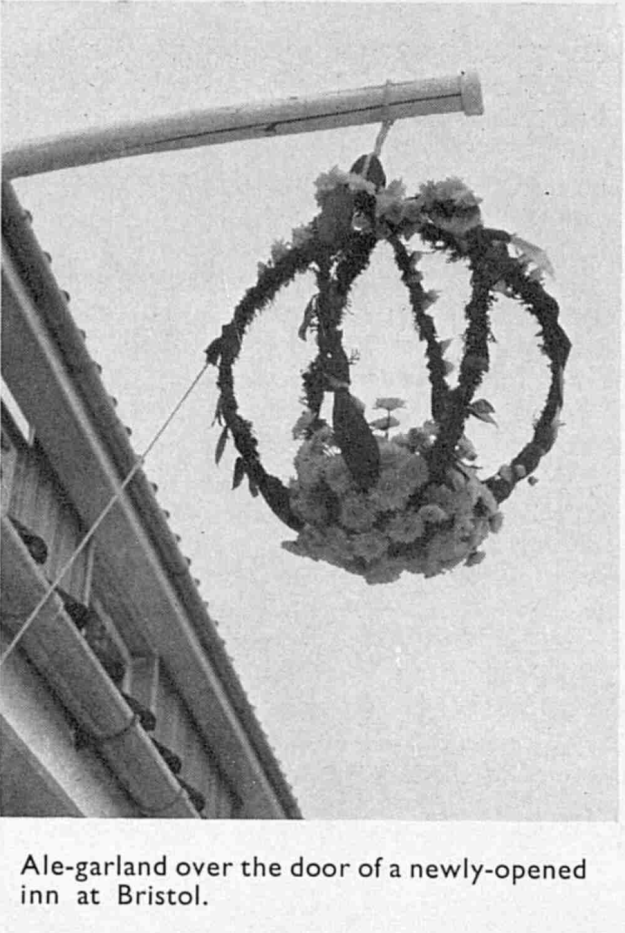
Image © Illustrated London News Group. Image created courtesy of THE BRITISH LIBRARY BOARD!

A longer explanation can be found in this article from the Lewisham Borough News, Tuesday 16th January 1951:

STORY OF THE ALE GARLAND
‘Conning The Brew’ In Ancient Times

By Stephen E. Hutchins

The hoisting of the ale garland in City and suburban taverns which is much observed about the New Year together with what is known as “ale conning” is regarded as the revival of a custom of the time of William the Conqueror and involves an expression of goodwill to all, and a kind of public protest against all sorts of vexatious regulations.

In olden days all garlands were to be seen outside all the inns at the festive season as a sign that fellowship and hospitality reigned within.

To “con the brew” is to sip at the mulled ale, the wassail bowl, and the ale posset, and the lambs wool — (meaning pulped roasted apples, sugar, nutmeg and ginger in warmed ale) — and pronounce it to be an excellent concoction.

The ale garland is usually displayed from a pole known as the “ale-stake” — in former days such ale-stakes had to be exhibited by inn-keepers to tell the travelling ale-conners that the new beers were ready to be tested.

The punishment for brewing poor beer was to be ducked in a pond in the ducking stool.

Under an Act of 1604 ale houses had to be inspected by constables to see if they were properly conducted and the object of the law was “to restrain inordinate tippling in inns and alehouses” and to confirm that the true use of the English inn was to relieve wayfarers and supply victuals, and not to entertain idle people and encourage them to spend their money.

Penny a Quart

Fines were levied by the constables and church wardens on people who indulged in drink for “an unreasonable time” and the money was given to the poor.

There was a fine of 5s. for being drunk and the alternative if the offender was unable to pay was to be awarded a spell in the stocks.

The price of the best ale was fixed at one penny a quart and “small” ale was one half penny a quart.

In 1614 the City had a thousand breweries with 40,000 barrels in their cellars. Beer was made at the back and sold for consumption in the front.

The old English ale was made from malt, yeast and water, and eventually beer flavoured with hops, called “hopping beer,” was brought in from Germany. This beverage became very popular.

Inns were often owned by the Church and we still have reminders of this in titles like the Seven Stars, the King and Keys, the Mitre and the Angel and “The Case is Altered” — the later signifying the period after the Reformation when the inns passed to other ownership.

Many inns were in the nature of hostels for pilgrims to the religious shrines. The poorest often received free hospitality and they were usually situated in a town near to the abbey or cathedral.

Among notable examples of this type of establishment may be listed the Falstaff of Canterbury, the “Star” at Alfriston, and the Pilgrims Rest beside Battle Abbey. The “Star” was a house of call for pilgrims travelling eastward to the noted Abbey at Battle and it was owned by the Monks of Battle.
Battersea and Chelsea Polytechnics Sports Ground

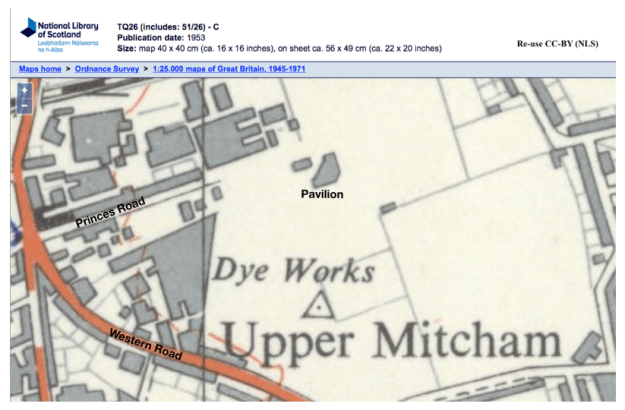
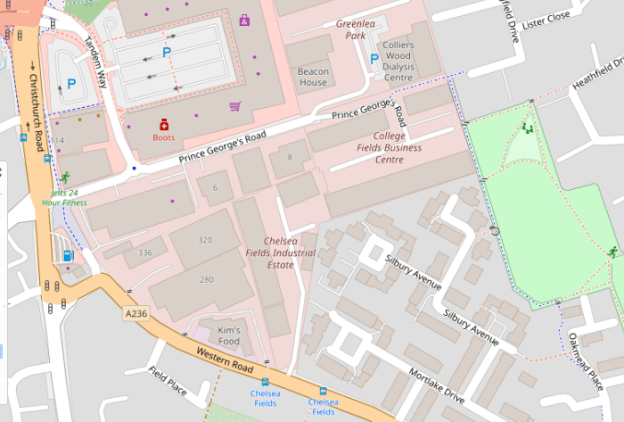
Sports ground that was accessed from Prince Georges Road, off the east side of Western Road. It had its own pavilion, and the grounds of 33 acres had cricket fields, hockey pitches and tennis courts.

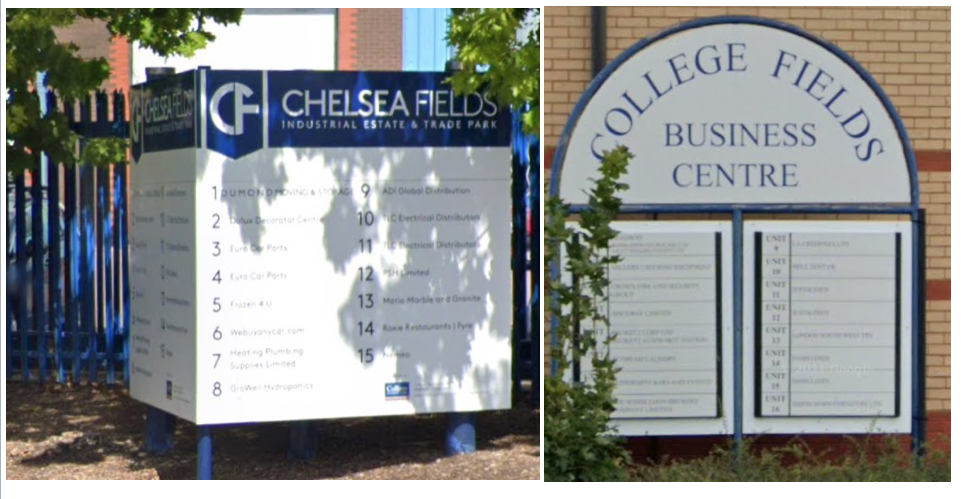
Around the end of the 1980s the trading estates of Chelsea Fields and College Fields were built on, and named after, this sports ground.

Trading estate signs from Google Street View

2022 map © OpenStreetMap contributors

1953 OS map (CC-BY)

Listed in the 1930 commercial directory as Battersea & Chelsea Polytechnics, athletic ground, Princes rd. T N 0852

Note that Prince Georges Road was previously called Princes Road.

News Articles
The sports ground is given as in Merton or Merton Abbey, and today would have an SW19 postcode.

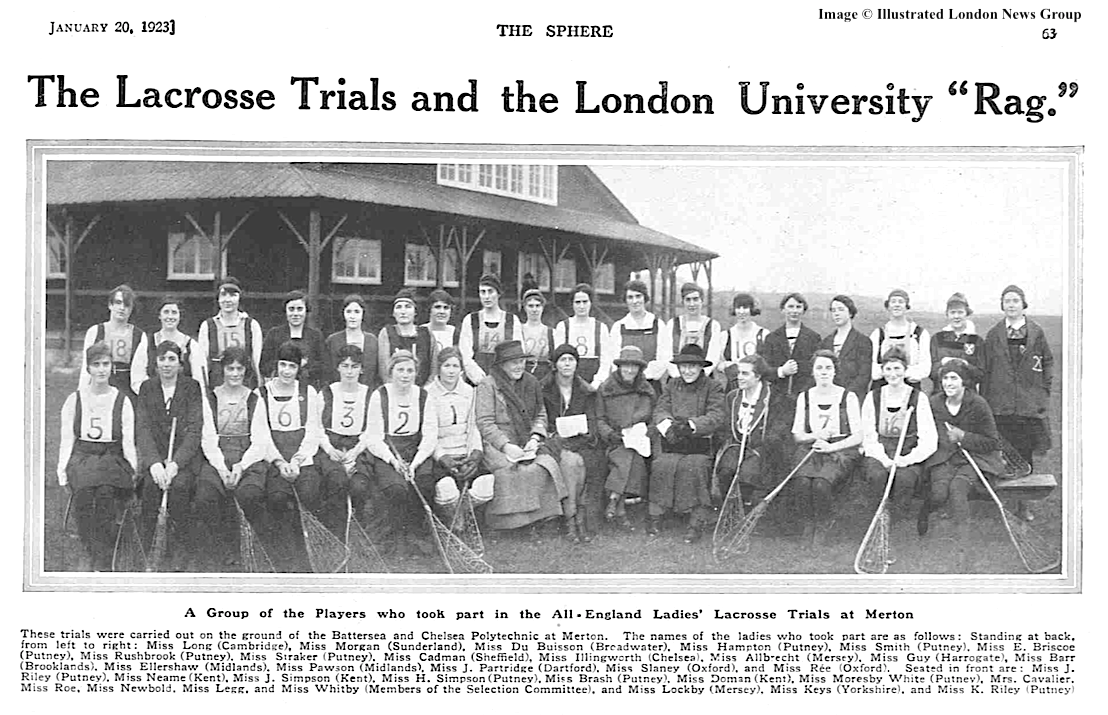
The Sphere – Saturday 20 January 1923

The Sphere, 10th January 1923, via the British Newspaper Archives. Image © Illustrated London News Group

The Lacrosse Trials and the London University “Rag.”A Group of the Players who took part in the All England Ladies’ Lacrosse Trials at Merton These trials were carried out on the ground of the Battersea and Chelsea Polytechnic at Merton. The names of the ladies who took part are as follows: Standing at back, from left to right: Miss Long (Cambridge), Miss Morgan (Sunderland), Miss Du Buisson (Broadwater), Miss Hampton (Putney), Miss Smith (Putney), Miss E. Briscoe (Putney), Miss Rushbrook (Putney), Miss Straker (Putney), Miss Cadman (Sheffield), Miss Illingworth (Chelsea), Miss Allbrecht (Mersey). Miss Guy (Harrogate), Miss Barr (Brooklands), Miss Ellershaw (Midlands). Miss Pawson (Midlands^, Miss J. Partridge (Dartford), Miss Slaney (Oxford), and Miss R6e (Oxford). Seated in front are Miss J. Riley (Putney), Miss Neame(Kent), Miss J. Simpson (Kent), Miss H. Simpson (Putney), Miss Brash (Putney), Miss Doman (Kent), Miss Moresby White (Putnev), Mrs. Cavalier, Miss Roe, Miss Newbold, Miss Legg, and Miss Whitby (Members of the Selection Committee), and Miss Lockby (Mersey), Miss Keys (Yorkshire), and Miss K. Riley (Putney)

Coventry Evening Telegraph – Friday 22 November 1929

HOCKEY

Surrey Beat Warwickshire

HEAVY SCORING AT MERTON ABBEY

Goals were plentiful on the Battersea and Chelsea Polytechnic Athletic ground, at Merton Abbey, yesterday, when Surrey Ladies defeated Warwickshire Ladies by eight goals to five. Warwickshire who on the previous day had been beaten by Kent, showed all-round improvement in their meeting with Surrey, who were seen to most advantage in the first half, during which period, however, their forwards were often checked by a very capable opposing half-back line. The Surrey defenders also hail to work hard on the occasion of numerous Warwickshire raids, in which Miss Curle, at centre-forward. was always conspicuous. Miss Curle scored three goals for Warwickshire before the interval, at which point Surrey led by six goals to three, and added another during the second half, when Miss Taylor also went through for Warwickshire. Miss Albright. of Surrey, aIso hit four goals, the other scorers for the winners being the Misses Brown, J. Ellis (two), and B. Ellis. The Warwickshire team was: Miss J. Edwards (Bedford College); Miss H. N. Burman (Edgbaston) and Miss M.L. Burnam (Edgbaston); Miss K. Kepple (Edgbaston), Miss M. Whippell (Lillington), and Miss G. Wilson (Knowle); Miss T. Harper (Knowle), Miss D. Fairlie (Birmingham University), Miss V. Curie (Lillington), Miss I. Naylor (Tettenhall). and Miss C. Goodman (Edgbaston).

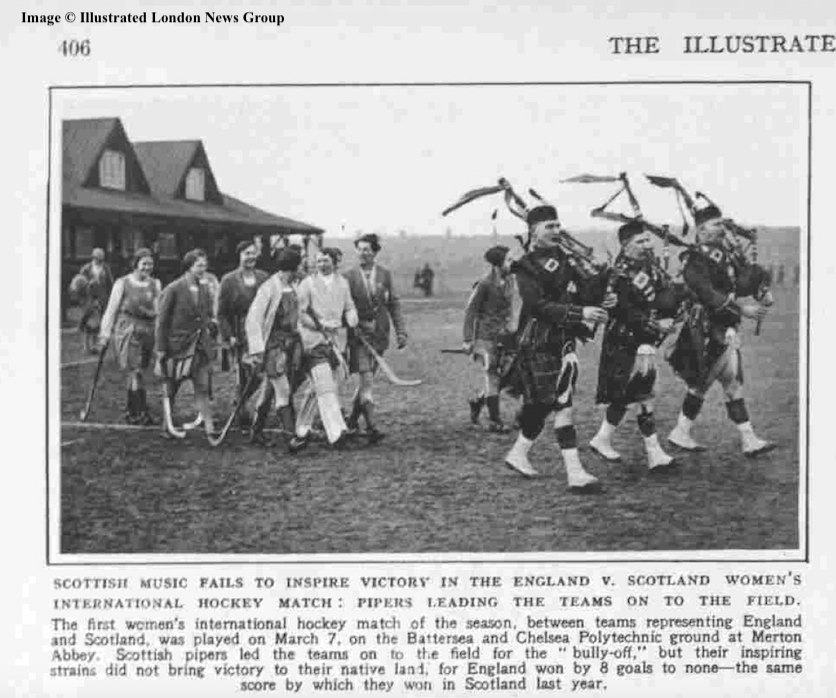
Illustrated London News – Saturday 14 March 1931

Illustrated London News, 14th March 1931, via the British Newspaper Archives. Image © Illustrated London News Group

Leicester Evening Mail – Thursday 09 July 1936

LEICESTER PILOT IN
FORCED LANDING

AIR LINER HITS
WIRE FENCE

Making a forced landing owing to bad weather on a sports ground at Lavender-avenue, Mitcham, this afternoon, a five-seater monoplane crashed into a 15ft. high steel wire fence and was damaged.

The pilot, Ivor Osborn BALDWIN, of Chez Nous, Hinckley-road, Leicester, was unhurt.

The plane belonged to Crilly Airways Limited, and was being flown from Leicester to Croydon. It had landed earlier at Heston and was on the last lap of the flight when the accident happened.

SLIPPERY GROUND

Owing to the wet state of the ground and with rain falling heavily, the pilot, although breaking hard, was unable to stop the machine before it crashed into the fence which surrounds a number of tennis court on the Battersea and Chelsea Polytechnic sports ground.

One wing of the monoplane, which also struck a wooden fence, was broken and slight damage done to the fuselage.

Norwood News – Friday 18 May 1956

IT’S A GREAT LIFE BEHIND A MOWER

WHEN Mr. L. E. KIMBER became head groundsman at the Battersea and Chelsea Polytechnic sports ground in Western-road, Mitcham, it was “very third rate.”

But that was ten years ago. Now the ground is one of the finest in Mitcham.

And the recipe for good groundsmanship, says Mr. Kimber, is “Work, work and more work. You’ve got to have a love of the open air and you must be fit.”

At 55 he is an excellent advertisement for a life behind the lawnmower. He is wiry and rosy-cheeked.

“I’m up at dawn and in the’ summer I often don’t finish on the ground until late at night. But I wouldn’t have another job.”

Groundsmanship runs in his family. His father has just retired as head groundsman at another club. He is in his 80’s.

33 ACRES

There is a staff of only four to attend to the 33 acres of cricket fields, hockey pitches and tennis courts. But their work is made, easier by Mr. Kimber’s policy of “a machine for every job.”

The garages are stocked with mowers, rollers, line – marking machines and a tractor. There is a small motor mower for the cricket pitches, a larger one for the surrounding turf and a third for the’ rougher outfield.

The tractor, which is fitted with rollers in place of back wheels and which pulls a mower, can cover 15 acres a day. The ground is usually mown two or three times a week.

But Mr. Kimber does not rely entirely on mechanisation. ” I have a good staff. They are keen and they keep up to my standards. “I’ve been told that our pitches, are equal to those on the Cricket Green.”


Maps are reproduced with the permission of the National Library of Scotland.