Tag Archives: 1928

Bishopsford

House that stood in Poulter Park, east of Bishopsford Road. Described in an auction ad from 1886 as having been built in 1866. An auction ad of 1917 refers to it as being in Mitcham.

It was sold in 1928 according to this article in the 28th April 1928 edition of The Illustrated Sporting and Dramatic News:

THE NATIONAL PLAYING FIELDS ASSOCIATION.

— The R.C. Poulter Open Spaces Trust has purchased, at a cost of £5,000. the property known as Bishopsford, Carshalton, Surrey, and presented it, through the National Playing Fields Association, to the Carshalton Urban District Council.

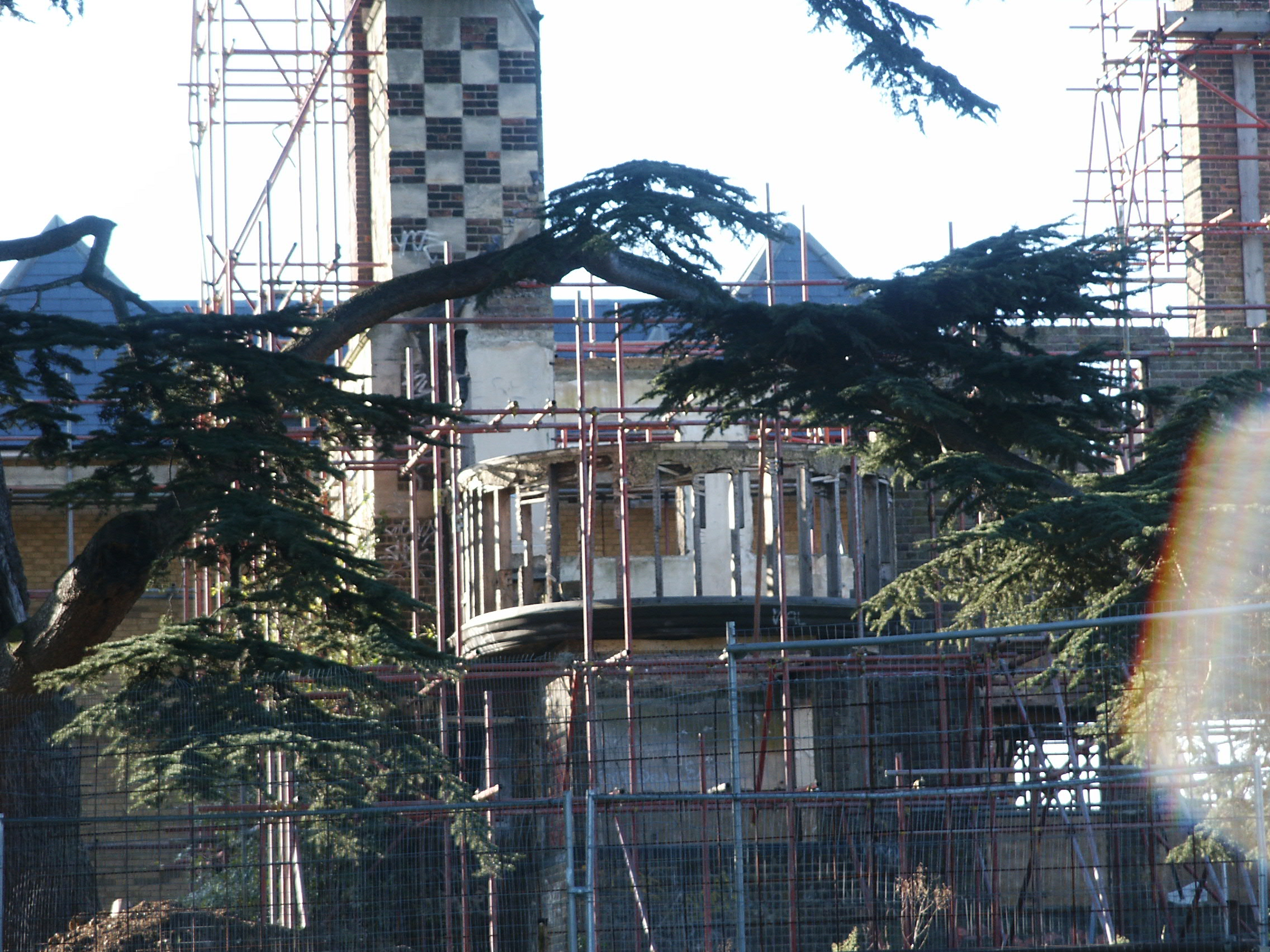
Converted to flats in 2005/2006.
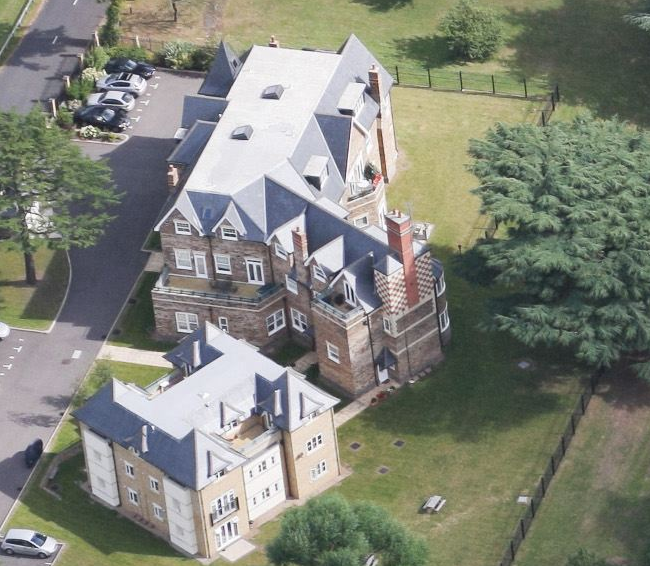
2016 aerial view of Bishopsford converted to flats

2016 aerial view of Bishopsford converted to flats

Surrey.

— By order of the executors of the late Alfred Attwood, Esq. — The very attractive Freehold Residential Properties, known as Bishopsford and Hillfield, situate in the parishes Carshalton and Morden, about mile from Mitcham Junction Station (whence there is an exceptionally good service fast trains the City and West End), ten miles by road to the Royal Exchange and nine and half from Whitehall.

Messrs. Debenham, Tewson, Farmer, and Bridgewater Have received instructions to Sell by Auction, at the Mart, E.C., on Tuesday, June 22nd at Two, in two lots, THE above-mentioned VALUABLE FREEHOLD PROPERTIES:-

BISHOPSFORD, the residence of the late Alfred Attwood, Esq., comprises capital modern Family House, erected about 20 years since from the designs of a well-known architect, occupying an elevated site, with long carriage-drive approach, and surrounded by charming lawns and pleasure grounds and well timbered ornamental paddocks, with outbuildings, glasshouses, good kitchen garden, fruit plantation, and pretty piece of woodland, together about 35 acres. The residence contains on the upper floor two large bedrooms for servants, and space in the roof for two or three more rooms on the first floor six capital bed rooms (all of good dimensions), two dressing rooms, fitted bath-room, and water closet; on the ground floor extensive lofty dining and drawing room, each about 30-ft. (including large bay window) by 17-ft. 6-in.; study, and convenient offices, with dairy and cellars in the basement. The property is partly bounded the river Wandle, which is a very pleasing feature, and has long frontage to the main road, upon which one more superior residences could (without detriment) be built. Possession will be given on completion of the purchase.

HILLFIELD adjoins the preceding property, and consists of another excellent modern Family Residence, with stabling outbuildings, attractive grounds, and grass paddock, in all about four acres. Let on lease for 21 years from 1877, at rental of £170 per annum.

Particulars of Messrs. Arkcoll & Cockell. Solicitors, 11 and 42, Street. Southwark, S.E.; or of the Auctioneers, 80, Cheapside, E.C.

Source: Croydon Advertiser and East Surrey Reporter – Saturday 05 June 1886 from the British Newspaper Archive (subscription required)


The Bystander, 9th May, 1917

CLOSE TO FAMOUS PRINCE’S GOLF COURSE.

Ten minutes from station. Easy reach Mitcham Junction.

IMPORTANT FREEHOLD RESIDENTIAL PROPERTY,
“BISHOPSFORD,” MITCHAM, SURREY,
standing well up in rural situation, with fine views.

LONG DRIVE with picturesque lodge. — 12 bed and dressing rooms, baths, 2 staircases, lounge hall, 4 handsome reception rooms.

MAGNIFICENT OAK-PANELLED BILLIARD ROOM
(45ft. by 21ft.).

Stabling, garage, cottage, small farmery, glasshouses. LOVELY GARDENS, orchard, park and woodland in all about 55 ACRES, with long frontage to the River Wandle. ELECTRIC LIGHT. COMPANY’S WATER. TELEPHONE.

To be SOLD by AUCTION, at The Mart, E.C., on TUESDAY, JUNE 5th (unless previously disposed of). Solicitors, Messrs. F. F. and H. LANDON, 53, New Broad Street, E.C.

Full details of Auctioneers, 3, Cockspur Street, S.W.1.

19170905 for sale ad with photo


Photos from 2005 of the rebuilding

17th November 2005

17th November 2005
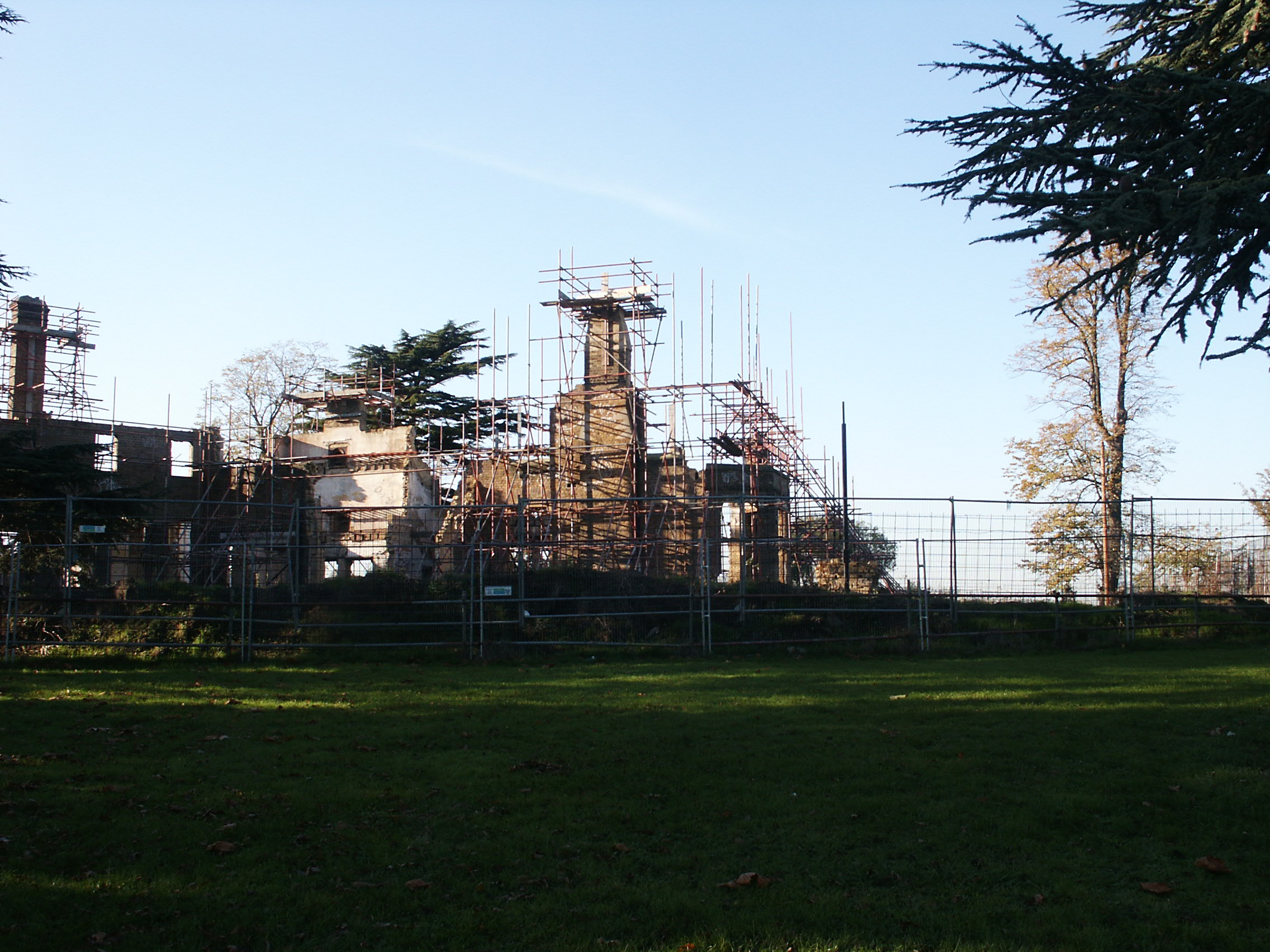
17th November 2005
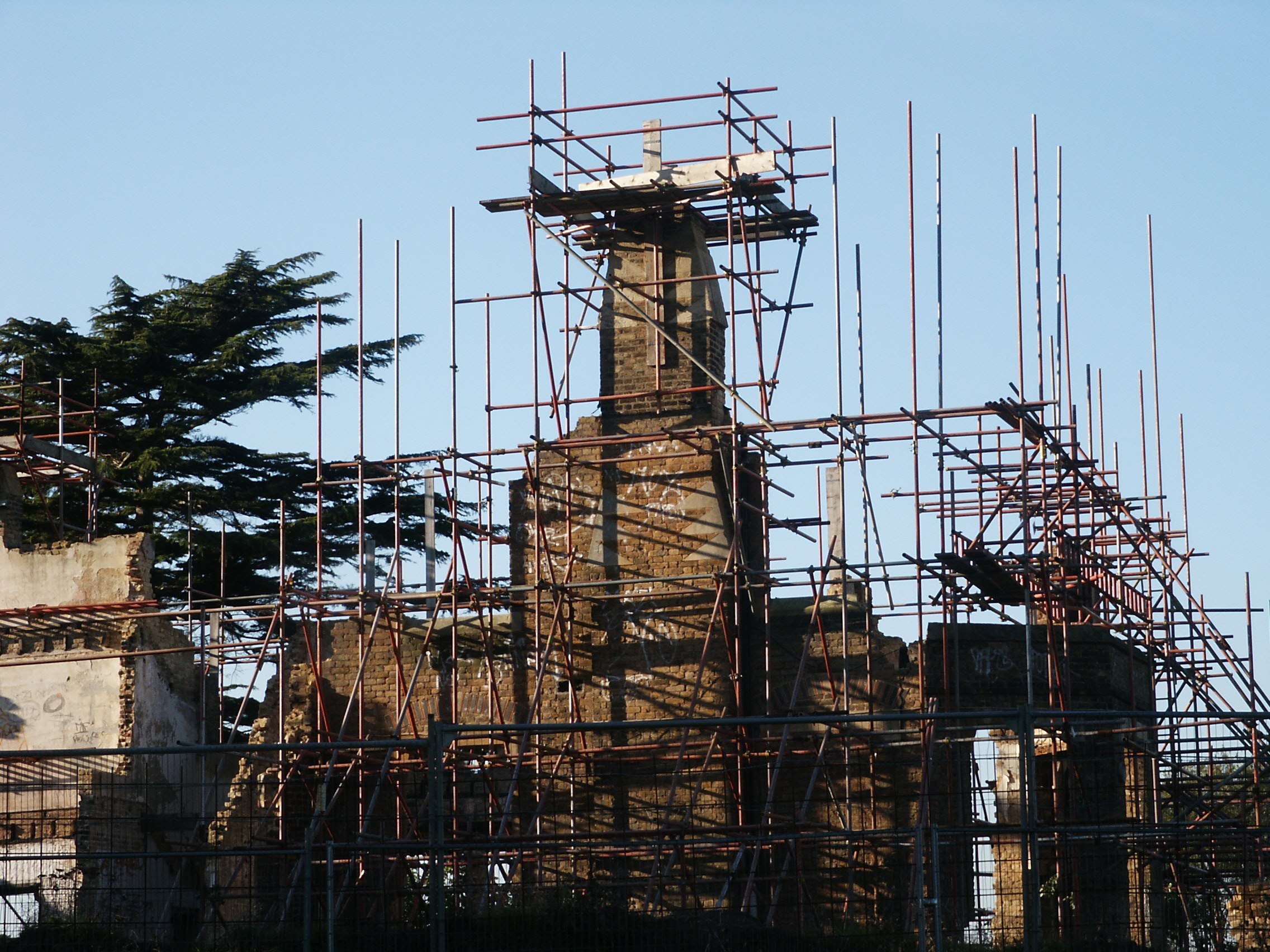
17th November 2005
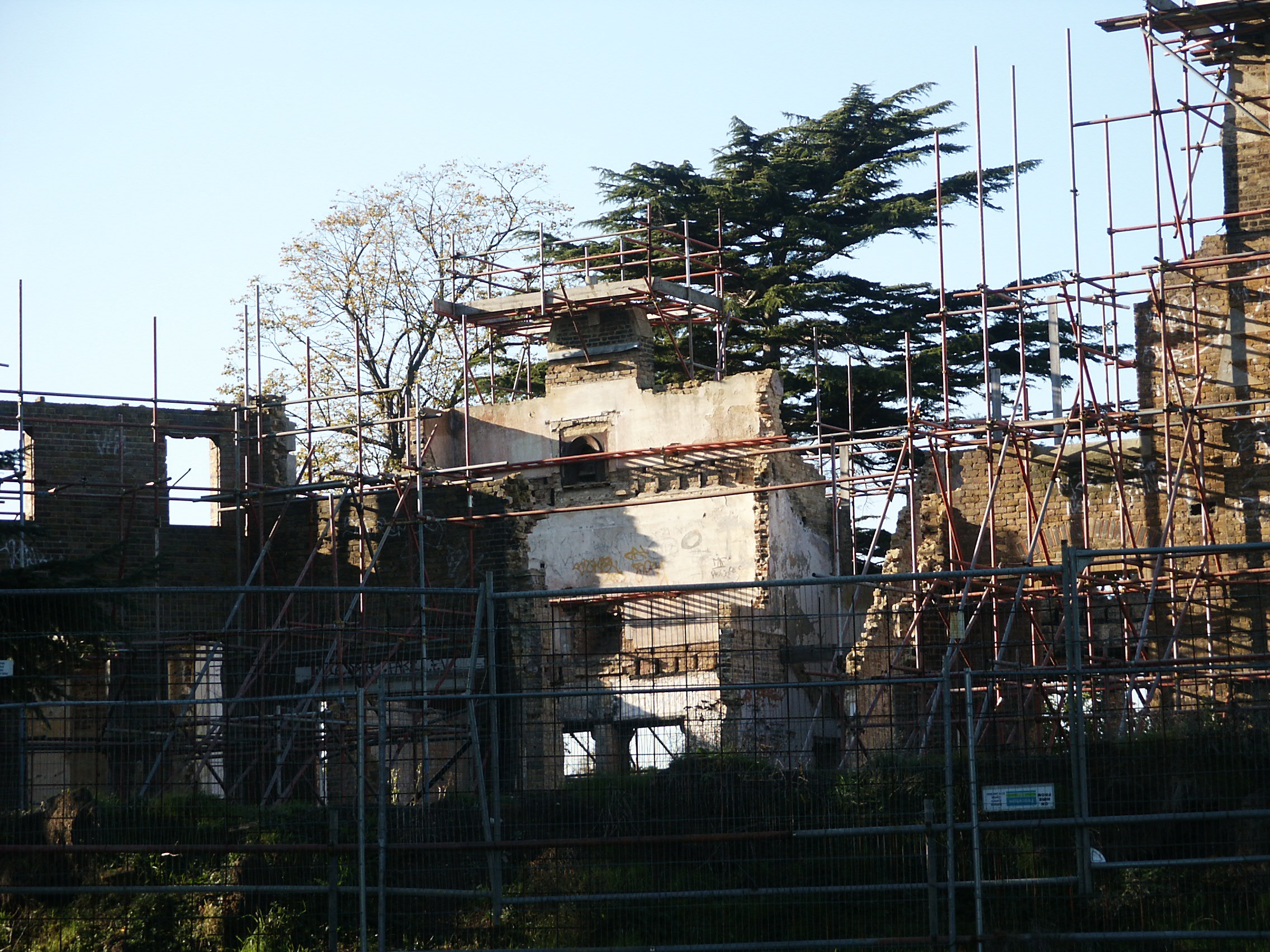
17th November 2005

17th November 2005
17th November 2005

17th November 2005

17th November 2005

17th November 2005

17th November 2005

17th November 2005

17th November 2005

17th November 2005


Newspaper Articles

GARDENER. — Young Man wants Situation, as UNDER GARDENER; understands gas engines; would like to learn electric lighting; age 22; disengaged September 14.— G. Hewitt, Bishopsford, Mitcham.

Source: Sussex Agricultural Express – Saturday 01 September 1906 from the British Newspaper Archive (subscription required)

LOST. A large white BULL TERRIER DOG, nine months old. Supposed to have strayed from his home on Sunday last. Whoever will take the same to the Mitcham Police-station or to Mr. Attwood, Bishopsford, Mitcham, shall receive £1 reward.

Source: Croydon Advertiser and East Surrey Reporter – Saturday 28 June 1879 from the British Newspaper Archive (subscription required)


A 1902 sketch of extension is on Merton Memories.

Isolation Hospital

1938 OS map coutesy of National Library of Scotland usage CC-BY

From the 1913 Health Report, published in February 1914:

The Isolation Hospital, which is situated in Beddington Corner, Mitcham Junction, was opened at the beginning of March, 1899, and since that date 4,309 patients been admitted.

Accommodation.

At the time the Hospital was first opened, the population of the district being about 28,000, it was thought that 28 beds will be sufficient accommodation. Shortage of beds, however, became more pronounced in each succeeding year, and in 1905, the Hospital was very considerably enlarged by the addition of a Scarlet Fever pavilion of 22 beds. The hand laundry, and some additional dormitory accommodation is provided in the Administrative Block.

A further enlargement took place in 1910, which included a cubicle block 12 patients, and also quarters for Resident Medical Officer.

Staff

The Staff of the Hospital consists of

TitleNumber

Resident Medical Officer 1
Matron 1
Assistant matron 1
Nurses 13
Laundresses 3
Engineers 2
Servants 7
Wardmaids 6
Seamstress 1
Gardeners 2
Porter/Portress 1 each

Patients

During the year 292 patients have been admitted, of which number

ConditionNumber

Scarlet Fever 185
Diphtheria 94
Typhoid Fever 6
Puerperal Fever 1
Cerebro-spinal Meningitis 2
Erysipelas 4

Nineteen of these patients were admitted by arrangement with other authorities, and 17 were admitted from Merton.

Of the 292 patients admitted, 280 were discharged as cured, and 12 died, viz., 3 from Scarlet Fever, 5 from Diphtheria, 1 from Typhoid Fever, 1 from Erysipela, and 2 from Cerebro-spinal Meningitis (including one from Tuberculous Meningitis).

The case mortality is 4.1 per cent as compared with 4.4 in 1912.

In Scarlet Fever the case mortality is 1.5 per cent as compared with 0.85 in 1912, and in Diphtheria it is 5.3 per cent as compared with 7.9 per cent in 1912.

During the year 1,120 swabs were examined at the Hospital.

The sputum of 17 patients in the Hospital were examined during the year.

Note that the health report was for the Croydon Rural Sanitary Authority and the figures shown are for all parishes, which included

  1. Addington
  2. Beddington
  3. Coulsdon
  4. Mitcham
  5. Morden
  6. Sanderstead
  7. Wallington
  8. Woodmansterne
  9. Merton

1902 Nurse Appointment

From the minutes of the Croydon Rural District Council
Volume 8
1902 to 1903
15th May 1902
page 99

The Council considered applications for the appointment of a nurse at the Isolation Hospital, and had before them Nurse Owen, of Gravesend, Nurse Avery, of Islington, and Nurse Blaker of Portslade.

After interviewing the candidates, it was Resolved, That Nurse E. Blaker, of Portslade, be, and is hereby appointed nurse at the Isolation Hospital with a salary at the rate of £24 per annum, together with uniform, and the usual resident allowances, in accordance with the terms of the advertisement.


Demolished in the late 1980s, more information can be found at the Lost Hospitals website.


Extract from the 1912 Report on Isolation Hospitals, available on Archive.org

Croydon Rural and Merton Joint Hospital District.

Beddington Corner Hospital.

The hospital erected by the Croydon Rural District Council (now transferred to the Croydon Rural and Merton Joint Hospital Board) is situated in an outlying part of the Carshalton Urban District, but close to Beddington Corner in the Croydon Rural District, from which it is approached by a bridge over the River Wandle, which forms the boundary between the two districts. The site was purchased by means of a loan of £4,500 in 1895. The total extent of land purchased was 19 acres, but only 5 acres were at first enclosed for hospital purposes. The original hospital was erected by means of loans amounting to £17,500 in 1897-8 and contained accommodation, on the Board’s standard of space, for 28 beds. It comprised two pavilions (plan C), each with a six-bed and a four-bed ward, also on observation block (on plan B) with four two-bed wards. In addition, there were provided an entrance lodge, administration block, laundry block, with stabling, discharging block, and mortuary and post- morten room. In 1901 a loan of £700 was sanctioned for heating apparatus. The cost per bed of the hospital as thus constructed was high, viz., £650 without site and £810 including site. Subsequent additions, however, although adding to the total cost, have diminished the cost per bed.

In 1904 a further loan of £6,400 was sanctioned for extensions of the hospital, including a pavilion with two 10-bed and two single-bed wards and a day room over the centre, also an enlargement of the laundry block with provision of steam machinery and a destructor furnace.

These additions had the effect of reducing the cost per bed of the enlarged hospital to £492 without site and £582 with site.

In sanctioning the loan, the Board pointed out the need for additional observations wards, the existing observation block being in part reserved for cases of puerperal fever.

In February, 1910, a loan of £4,740 was sanctioned for further additions, including an isolation block of special design containing 12 single-bed wards. This extension again reduced the cost per bed, viz., to £473 without site or £546 with site.

The hospital was visited by me in May, 1911, in company with Dr. Fegen, medical officer of health; Dr. Cave, resident medical officer; and Mr. Chart, architect and surveyor. The object of the visit was especially to see the new isolation block which is on a novel plan designed by Mr. Chart which will be best understood on reference to the accompanying plate. It is of cruciform shape having a large central octagonal duty room and four wings, each of which contains three single-bed wards completely separated from one another by plate-glass partitions as in the Board’s plan D, which indeed it resembles, except in having four wings with three rooms in each, instead of two wings with two rooms in each. The wings point to N.W., S.W., S.E., and N.E. The wards are entered separately from open verandahs. The verandahs of the N.W. and S.W. wings, which are used for females, are continuous with each other, meeting on the W. side at an angle in which is placed the annexe containing the w.c. and slop sink. The verandahs of the S.E. and N.E. wings, which are used for males, are similarly arranged. The area of each ward is 144 square feet, and its height 10 feet, giving 1,440 cubic feet. There is one square foot of window area to each 70 cubic feet of space. The wards are warmed by fireplaces on the floor level, without grates. To each ward there is an external coal-bunker built of reinforced concrete, of hopper shape, opening by a door at the bottom into the ward at floor level close to the fireplace. This arrangement is said to effect a great saving of labour, as there is no need to carry coals into the wards; the bunkers are accessible to carts, and the carter, when delivering coals, has only to empty a sack into each bunker. There is a lavatory basin in each verandah, with two pedal-action taps (which, of course, cannot be used simultaneously by one person), for hot and cold water respectively; these are said to have given some trouble in frosty weather, the pipes being exposed.

The experience of the new block is said to have been quite satisfactory; the nursing has not presented any difficulty, and there have been no cases of cross-infection. It is found convenient to place young children in the rooms nearest to the duty room.

The cost of this block, including drainage (£120), was £2,195, or £183 per bed.

The other blocks follow more usual designs. They are solidly built: the floors are of terrazzo, and the walls lined with glazed brick, or with plaster distempered. Xo complaints were made of the terrazzo as being hard and cold, but it was cracked in places.
The warming, by central stoves, of the pavilion first erected was found insufficient, and a system of heating by warm water was subsequently adopted.

The observation block on plan B. is now little used, the new cubicle block being preferred for observation purposes. At my visit two of the wards had been used as a laboratory, while the other two were reserved for typhoid fever.

In all the pavilion wards at this hospital I found a considerably larger number of beds than the wards were designed to contain in accordance with the Board’s standard of space, though they were not overfull of patients at the time of my visit. These additional beds are placed in the wards in order to enable the Joint Hospital Board to take in patients on payment from the Caterham Urban district, and from the Guards’ barracks at Caterham.

Cruciform isolation block


Minutes of meetings held by the Croydon Rural District Council are available on request from the Merton Heritage and Local Studies Centre at Morden Library.

Maps are reproduced with the permission of the National Library of Scotland.