Town gas was produced at the works in Western Road, Mitcham, from around 1867 to 1960. During the 1930s around 200 tons of coal a day was used, see How Gas is Made.

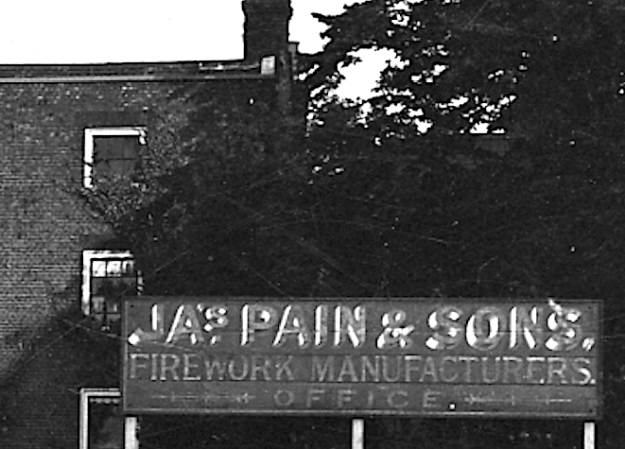
Clip from Merton Memories photo, reference Mit_Work_Industry_19-4, copyright London Borough of Merton, taken 18th March 1960
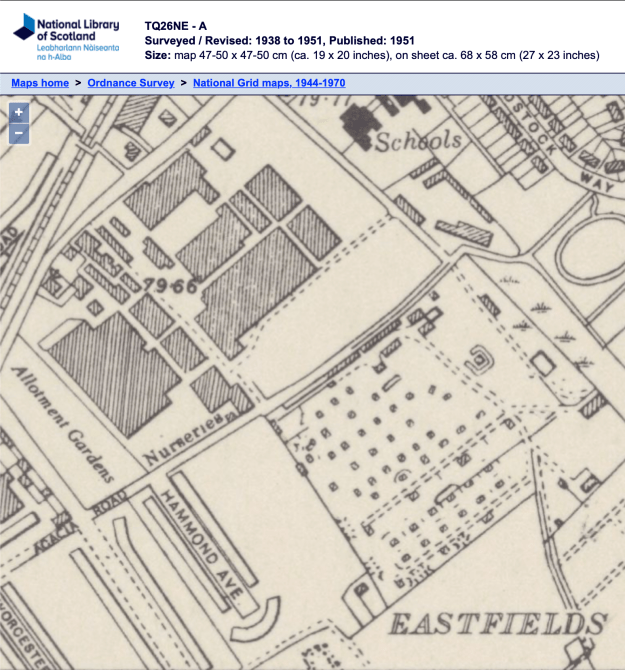
This OS map from 1951 shows three gas holders.

In 2019, Google StreetView shows the only remaining gas holder, and a 65 metre high microwave radio tower next to it.
From the Mitcham News & Mercury, 18th March 1960, page 1:
The gasworks to close over 100 jobs are hit
Mitcham’s gas will no longer be home-made. The gas-making department at the Western Road gasworks closes on May 1.
The supply will come by pipeline across Mitcham Common. The move is part of South-Eastern Gas Board’s change over to a grid system.
Well over 100 men will be hit, it is believed. A list of jobs available at the Mitcham works, and others, has been circulated.
Only short-term workers are in any danger of being out of work.
The Western Road works employs about 500 people. The clerical staff will remain.
The gasworks has been at Mitcham since 1867. It is now considered to be out of date.
Will its three gas holders go? The answer, say the gas board, is no.
The holders will store the piped gas – it will come mainly from Croydon.
What do people living in the gasworks think?
A woman at Fountain Place whose home with is within 30 yards of a gas holder said: “I can’t say I mind the gas making department closing, but I would be rather sorry if the holders went.
“I think living near gasworks is healthy, I am 72 and have hardly had a day’s illness.”
Another Fountain Place woman, Mrs Elizabeth Cooper, said: “Perhaps the end of gas-making will mean that or washing no longer gets dirty. I can’t really complain about smells.”
Healthy? “Never ill at all – that’s our family,” said Mrs Cooper.
Another woman said: “I have got a sort of attachment for the gas holders. The place would not be the same if they went.”
Note: The gas appliance maintenance department moved from Western Road to Old Kent Road in March last year.
From the Norwood News – Friday 28 October 1960
Gas worker hits at Gas Board
Chairman of Lower Mitcham Young Conservatives, Mr Eric Pillinger (he works for the South Eastern Gas Board), hit out at a nationalised industry on Friday – the South Eastern Gas Board.
He said that since he had joined in prenationalisation days he had seen:
the level of surtaxed staff get bigger and bigger;
Gas works close down until there was only one left in the South Eastern area;TOO MANY
Work being carried out which could be done by a staff cut to a quarter;
“When we send some people round to inspect jobs to see they are going all right. Do we get just one person round ? No, we get half a dozen.”Mr. Pillinger, who said his claims of overstaffing were probably on the liberal side, thought economies should be made and some personnel “kicked out.”
Mr. Pillinger, speaking at a brains trust at the Buck’s Head, Mitcham, was answering a question on whether nationalised industries were carrying passengers among their executive staff.
From the booklet : The Wandsworth and District Gas Company, A Century of Progress 1834 to 1934.
The Wandsworth and Putney Gas Light and Coke Co. was formed in 1834. In 1934 it is comprised of eight original companies, brought together by two purchases and four amalgamations.
1834 Wandsworth Company formed.
1835 Kingston Company formed.
Malden Company formed.
Dormay’s Company (formed some time later).
1839 Epsom and Ewell Company formed.
1849 Mitcham Company formed.
1852 Wimbledon Company formed.
1857 Sutton Company formed.
1864 Mitcham Company amalgamated with Wimbledon Company.
1868 Kingston Company purchased Malden Gas Works.
1873 Wandsworth Company purchased Dormay’s Company.
1912 Wandsworth Company amalgamated with Mitcham and Wimbledon ; and Epsom and Ewell Company.
1930 Wandsworth Company amalgamated with Kingston-on-Thames Company.
1931 Wandsworth Company amalgamated with Sutton Company.
See also Companies Amalgamated with the Wandsworth Gas Company.
There was a competition to name the buildings at the gas works, see Gas Works Building Names
Maps are reproduced with the permission of the National Library of Scotland.


 Mitcham History Notes