Chocolate factory that was at Streatham Road
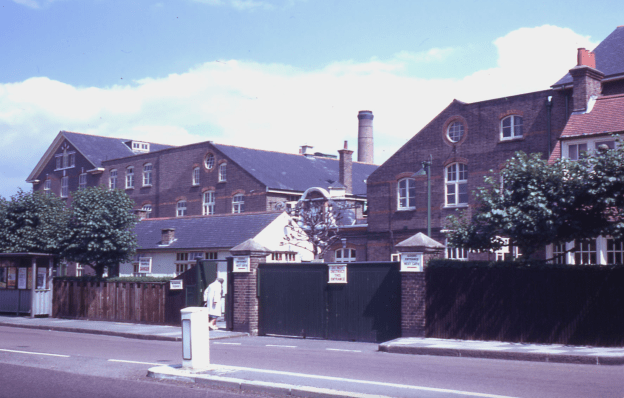
Photo taken by Eric Montague in 1970. Reproduced by kind permission of the Merton Historical Society.
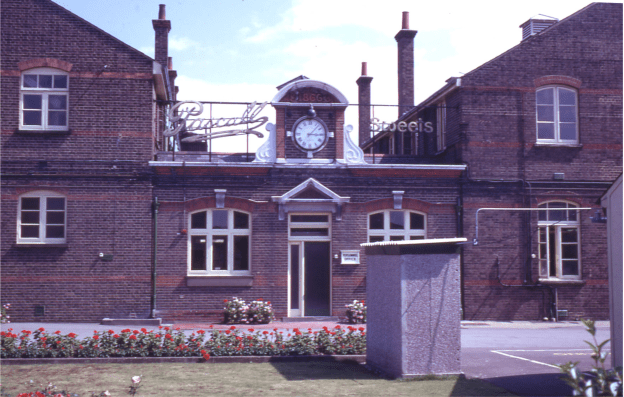
Photo taken by Eric Montague in 1970. Reproduced by kind permission of the Merton Historical Society. Note the year ‘1866’ above the clock.
The company was incorporated on June 11th, 1898, to acquire and take over as a going concern the business of a Manufacturer of Confectionery and Chocolates, founded by Mr James Pascall in the year 1866. He had set up a small shop off Oxford Street, after having worked for Cadbury.
In 1877 they moved to larger premises in Blackfriars.
The ‘Furzedown Works’ in Mitcham, on the Streatham Road, was gradually built up on a site bought in 1888, from land that was part of James Bridger’s Manor Farm. For the next ten years, production was at both Blackfriars and Mitcham. A fire that devastated the Blackfriars works in 1897 led to the Mitcham site being the main location of production.
In the 1960s the company was bought by Cadbury-Fry. In March 1970 it was announced that the Mitcham factory was to close, and production moved to Cadbury in Birmingham.
Source: Mitcham Histories : 2 North Mitcham, by E.N. Montague, pages 110-112.
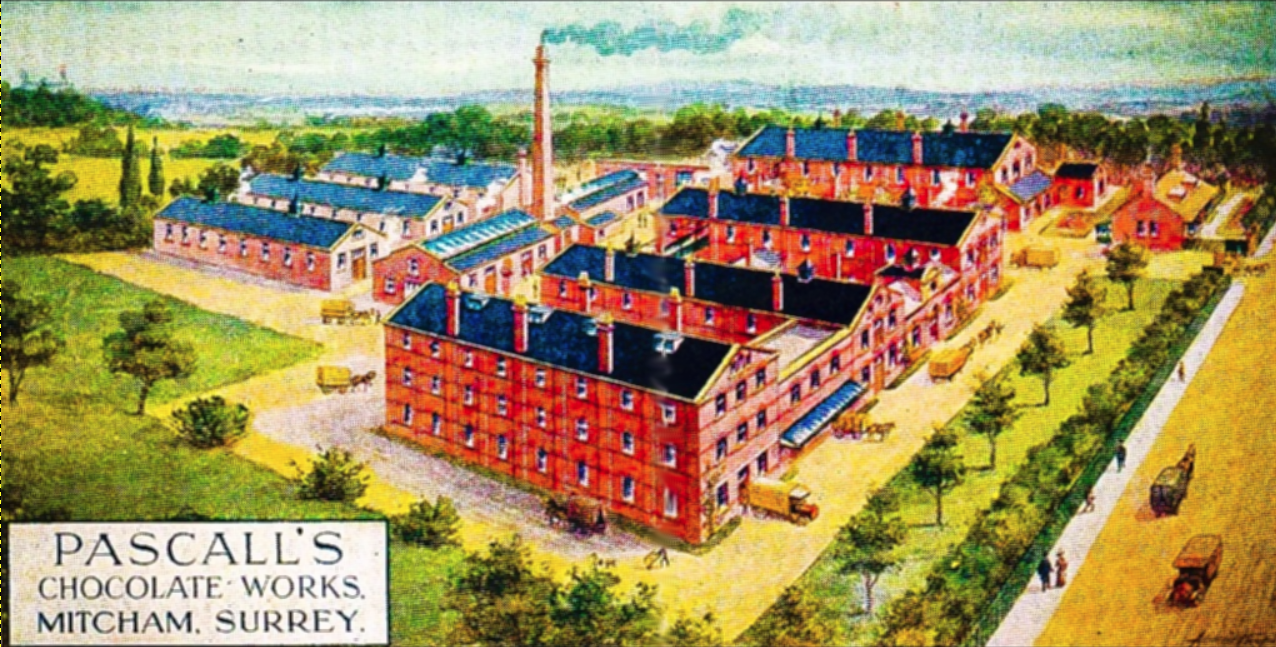
This OS map of 1952 shows the factory as ‘Chocolate Works’. The Fire Alarm Post (FAP) can be seen in the street near the entrance.
Merton Memories Photos
1945 Fire Wardens
1950 photo inside factory
1958 demonstrating toffee making
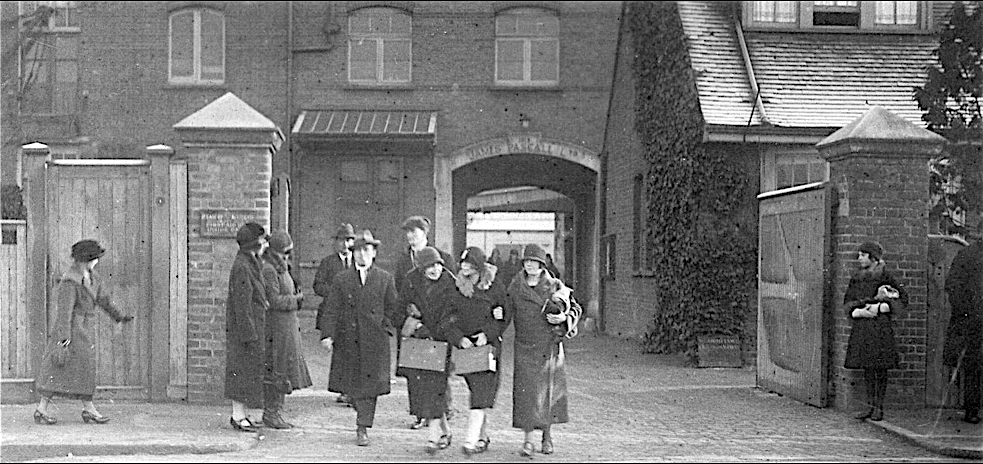
1920s (?) gates of factory
Closedown
Phasing in the Closure
From the Mitcham and Colliers Wood Gazette
2nd April 1971
A progress report on the run-down of the labour force and ultimate closure of James Pascall’s sweet factory in Mitcham, was given to members of Tooting and Wimbledon Local Employment Committee at their quarterly meeting, under the chairmanship of Mr. Kenneth Bryant, B.E.M.
Due largely to the foresight of the Company in phasing the closure over a period of several months, the redundancies are proceeding smoothly, said Miss E. M. Warren, Secretary to the Committee.
Major resettlement problems with almost inevitable unemployment would undoubtedly have occurred if the 1,100 or so employees who are to lose their jobs, had been released on to the local labour market at short notice. As it is, the staff of Tooting Employment Exchange have been able to organise a full-time site Office on Pascall’s premises, to interview employees individually some two weeks in advance of their terminal date, to give them in most cases, a choice of jobs to which to apply and to place them in employment so that they can go straight from one job to another without becoming unemployed.
MUTUAL CONFIDENCE
It is important, Miss Warren said, to cushion the shock of redundancy to employees, to give them a little time to get used to the idea that the work they have possibly been doing for years, will not be available to them indefinitely. By taking the Employment Exchange services to the workers in their own environment they are more at ease and a mutual confidence is built up between Employment Exchange and the employees.
If the first application for a job is unsuccessful, it only takes a worker a matter of minutes to call at the site office to see what other vacancies are available. It is easier for Employment Staff too as they get to know the employees as individuals and can, therefore, more readily find the right job for each person, a job in which he or she can settle and be happy.
Up to 12 March 160 men and 393 women had registered for work at the site office. A total of 790 submissions to employment had been made on their behalf and 298 had already started work in their new jobs, In addition, 52 applications for training courses under the Vocational Training Scheme had been dealt with of which 8 men had already commenced training, 24 had been accepted and were awaiting allocation and a further 15 were still under consideration.
UNEMPLOYED REGISTERS
Steeply rising unemployed registers at both Tooting and Wimbledon Employment Exchanges between Christmas and mid-March, presented a rather gloomy picture in both Exchange. areas, though. said Miss Warren a slight down-ward curve had been apparent during the last two weeks. She hoped, therefore, that the worst was over.
A figure of 3,125 unemployed had been reached in the Committee area, the highest figure since January 1968. Notified vacancies had also reached an all-time low figure during February and March. Despite this, placings had been maintained up to the time of the Postal Strike and in the three months to mid-February, nearly 100 more men and women had been placed in employment than in the corresponding period last year.
Demolition
Reported in the Mitcham News & Mercury of 17th March 1973 ‘Going . . going’. See Merton Memories photo.
Maps are reproduced with the permission of the National Library of Scotland.
 Mitcham History Notes