Plaques were placed along the route of the Surrey Iron Railway as part of the Wandle Valley Mapping Project, launched in February 1999. These were made of fibreglass and gave the appearance of cast iron.
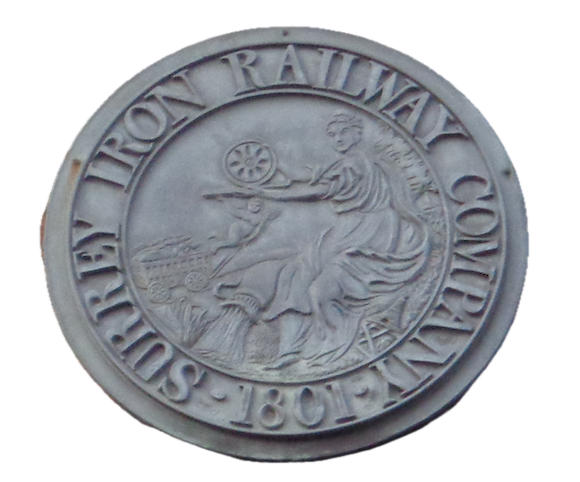
“Surrey Iron Railway Company 1801”
From News Shopper
Bellamy back to nature
20th February 1999Celebrity environmentalist Dr David Bellamy took time out from his busy schedule to visit Merton and launch the Wandle Valley Mapping Project.
The launch, held at the Wheel House, Merton Abbey Mills, marks the end of months of planning and researching the history of the valley.
Co-ordinators hope the project will promote the area to residents and bring in more tourists to see local landmarks and areas containing natural beauty.
A spokesman for the scheme said: “The principle aim of the project is to foster in the Wandle Valley communities, and in the young especially, a proper appreciation for their very significant local history and heritage.”
The Friends of Mitcham Common decided to buy one of the plaques and have it installed at Mitcham Junction Station.
From issue 48 February 2001 of the Friends ‘Magpie’ newsletter:
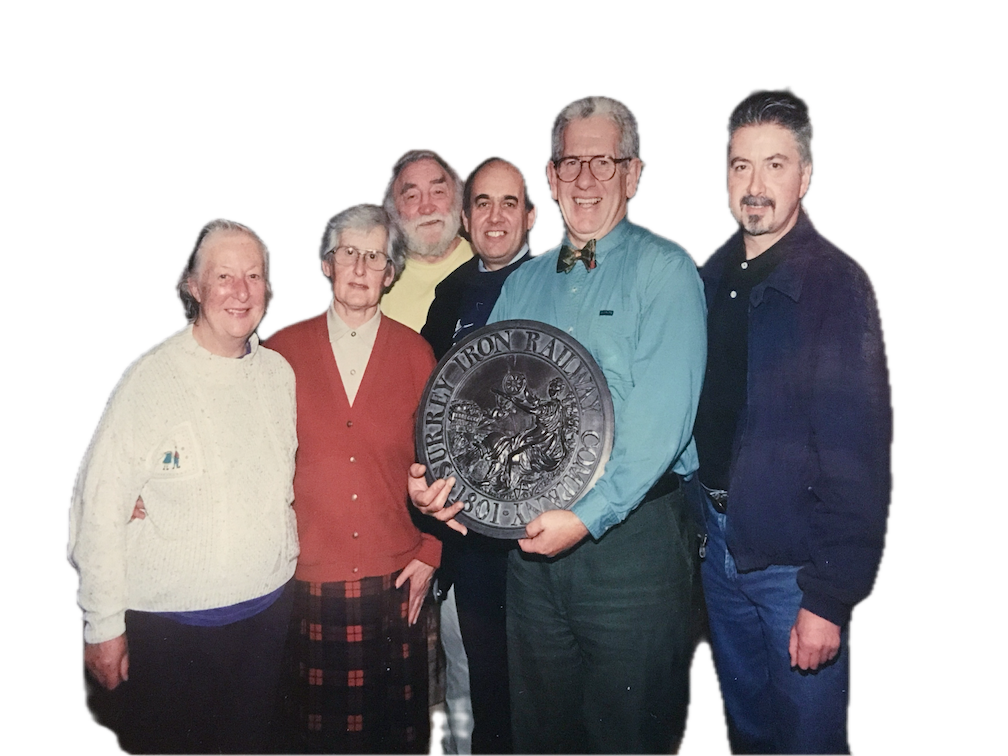
From left to right: Unknown, Janet Morris, David Bellamy, John Beaumont, Adam Hart-Davis, Colin Suttie.
Mr Suttie’s talk at our last AGM about the Wandle Valley Project included details of the S.I.R which, from 1804, ran across the Common where we now have the Tramlink. The iron Railway was probably the first public railway in the world and the Committee decided that we would buy a commemorative plaque to mark the route. The plaque was presented to your Chairman and John Beaumont at a ceremony in Wandsworth by none other than David Bellamy and Adam Hart-Davis!
The plaques were put in place on 26th July 2003, as described in this extract from issue 54 of the Magpie newsletter.
Overlooked Bicentenary
On 26th July 2003 the section of Tramlink from Mitcham to Waddon will have been a public railway for 200 years! No one, least of all the Tramlink company, seems to be making any publicity about this.
The Surrey Iron Railway, authorised by Act of Parliament in 1801, opened its first section from Wandsworth to Croydon on 26th July 1803. This made it the first public railway in the world. The line of this horse-drawn railway was used when steam trains and electric trains were introduced,
and latterly Tramlink has used the same route. The Wandle Project will be fitting plaques to commemorate the Surrey Iron Railway all along the route on 26th July. The plaque sponsored by our society will be installed at Mitcham Junction Station.
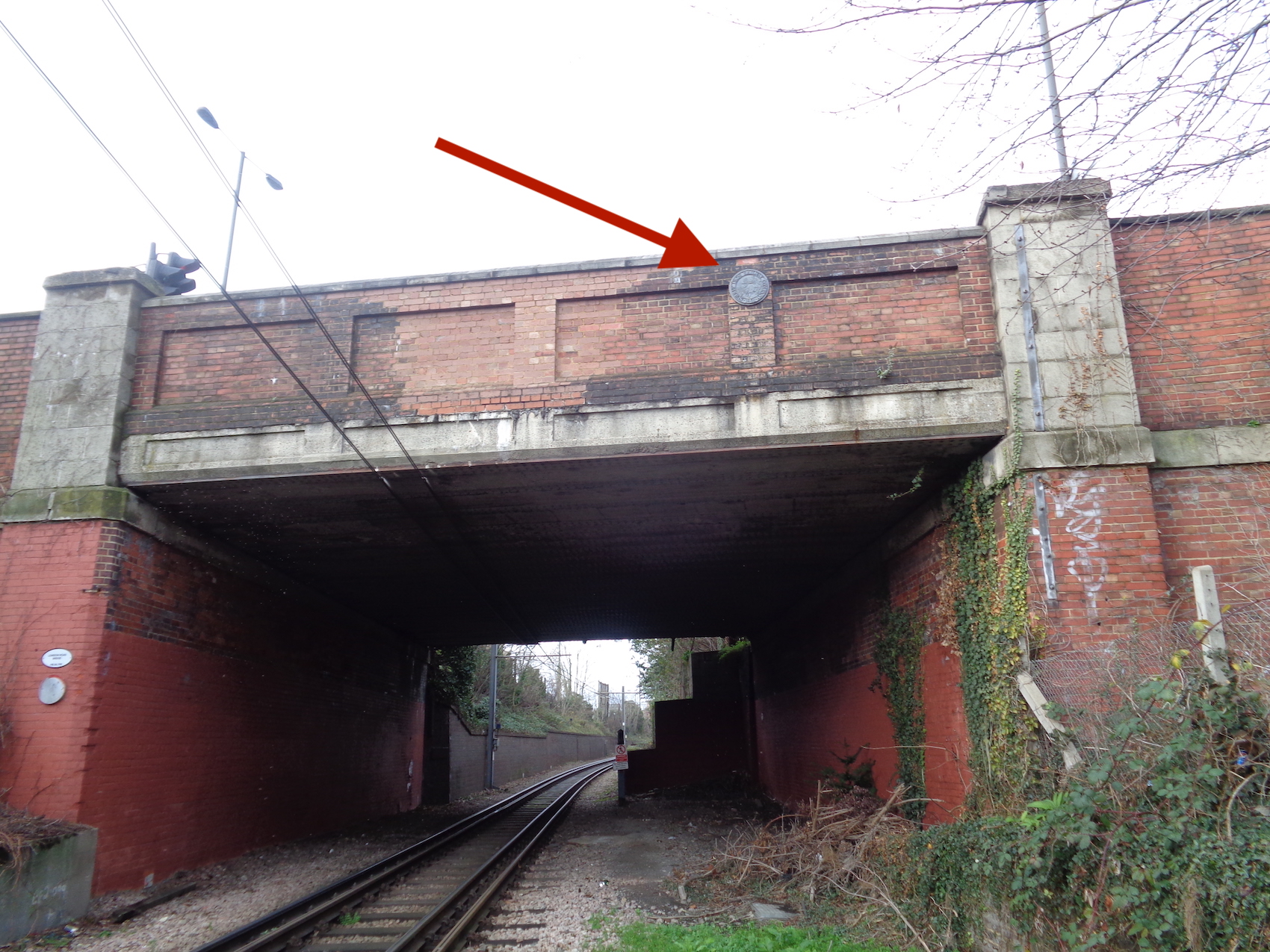
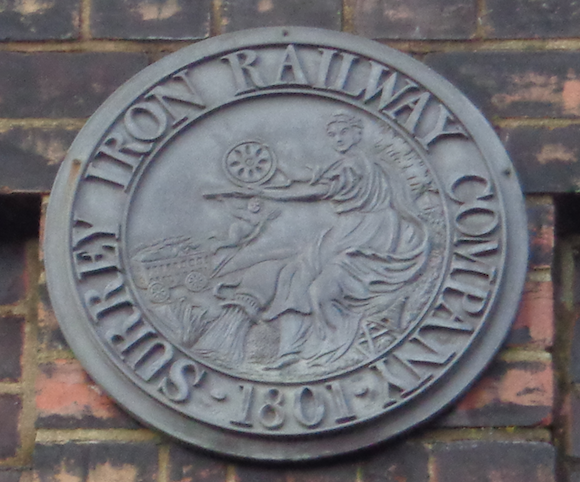
However, the plaque was put on the bridge over the tramline at the Mitcham Tram stop, not Mitcham Junction, as shown in these photos from 25th December 2018.
From the local Guardian
Relic rises from House of Reeves ashes
24th August 2011A plaque thought to have been destroyed during the demolition of House of Reeves has been found in the rubble and will be refitted to the wall in a ceremony in October.
The fibreglass roundel plaque, which commemorates the route of the Surrey Iron Railway from West Croydon station to Surrey Iron Railway Wharf in Wandsworth, was one of the only things left intact after fire gutted the 144-year-old family furniture shop.
It was initially thought the plaque was lost after the wall it was on was demolished, but it was found in the rubble by the site manager who returned it to the Reeves brothers.
The plaque was put up six years ago by Alan Suttie, head of Wandle Valley mapping project, after he was given special permission by London Heritage to fit the plaques in recognition of the first public railway in the world.
He is organising a special public ceremony in October, which will see the plaque returned to the wall at Reeves Corner.
Mr Suttie said: “Incredibly, when the site manager found the plaque it was still intact and only a little chipped. The fact it was the only thing left standing is really symbolic, it is a little continual of what was.
“The original plaque should go back up as it survived not only the fire, but the demolition too. It will be a symbol of the old building which will exist and carry on regardless of whether or nor the family choose to rebuild on their second site.”

 Mitcham History Notes