Category Archives: Cricket Green Conservation Area

1885 Mitcham Police Station Opens

3rd January 1885

The New Police Station.

This establishment was opened on New Year’s Day for the occupation of the inspectors, sergeants, and the single members of the Mitcham police force; as well as for the safe custody of any prisoners whose unfortunate lot it may be to be conveyed thereto. The police station stands on the site of the ancient dilapidated building formerly used for the transaction of police business at Mitcham. It has a neat and modest appearance, and is built of red brick, with stone facings. The entrance door is made of oak, which is reached by small flight of stone steps. On entering a well fitted and arranged office for the inspector is situated on the left, while to the right is the waiting room. To the front of these two rooms is the charge room, and in close proximity to this are the cells, well ventilated, and fitted up with all the latest improvements and conveniences allowed prisoners.

On the first floor in the front of the building of quarters for one married Sergeant, who will, as a matter of course, live on the premises with his wife and family. The quarters consist of two commodious bedrooms, kitchen with cooking range, and other useful appliances, pantry, and wash house with plate racks, shelves, sinks, with water connection. Every regard to comfort and health seems to have been paid and construction of these rooms.

At the rear of the building is the section house on the ground floor for the accommodation of six single constables who will in future live and sleep on the premises instead of lodging different parts of the parish as heretofore. The section house comprises a day-room with library, clothes-room, boot cleaning room with a small locker for each man’s brushes. The dormitory contains six bedrooms, fitted up with hot and cold water baths, is in the top storey of this portion of the building which forms one of the most complete, comfortable, and well arranged police stations in the county.

The builders were Messrs. Lathey Bros., Battersea, and the work was completed in March of last year.

Source: Croydon Advertiser, 3rd January 1885
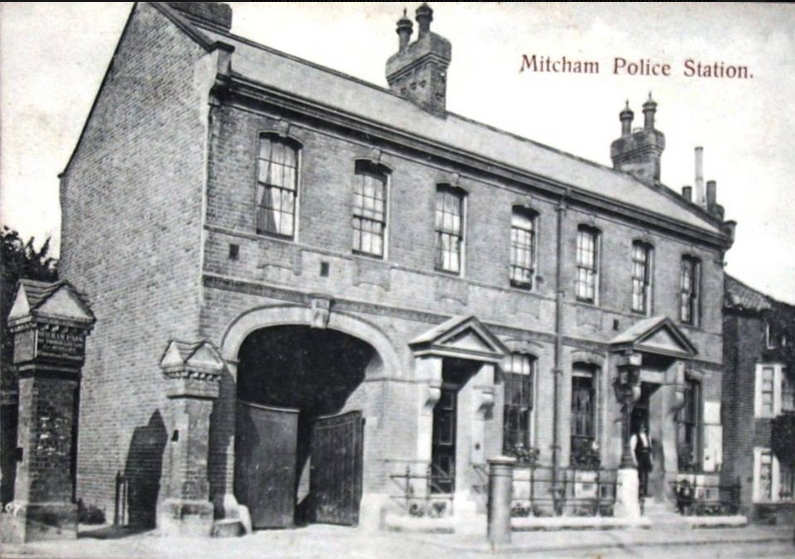
1910 postcard

1910 postcard

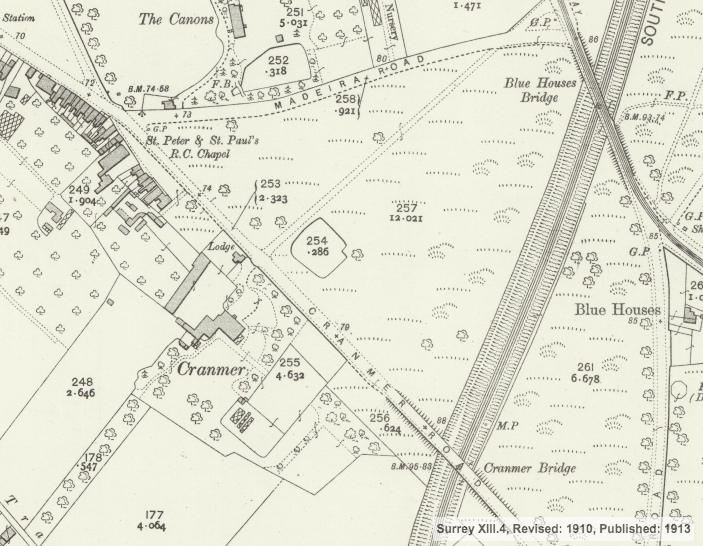
1910 OS Map


Occupants of station on Electoral Registers
1890
Charles Barnes, Alfred Bunfield, William Carter, George Clay, William Marjetts, Percy Price, David Thomas
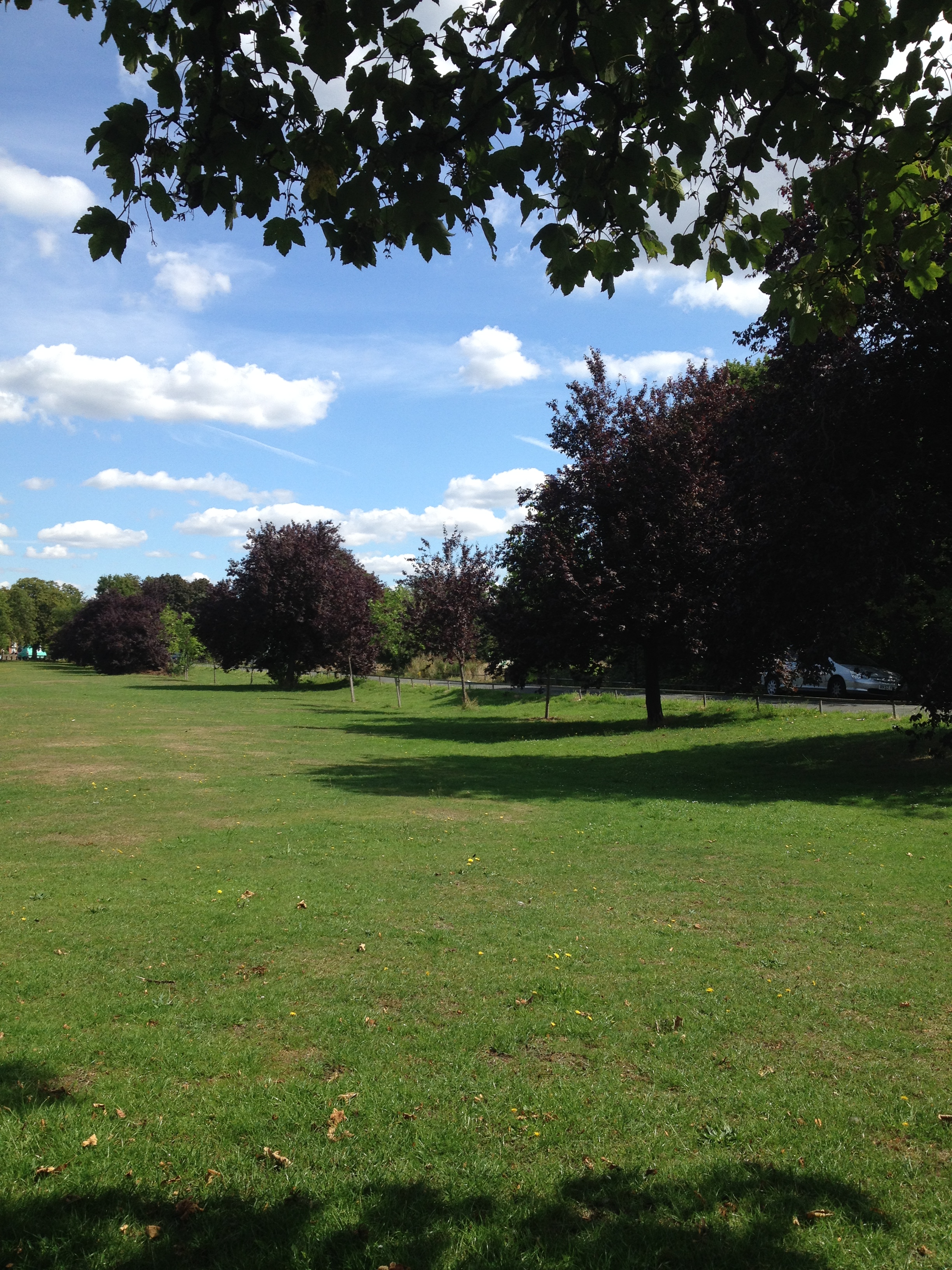
King George VI Avenue

After the abdication of Edward the eighth, Albert Frederick Arthur George became King George VI on 11th December 1936.

His wife, the then Duchess of York, proposed a nationwide tree planting as a permanent memorial of the coronation.

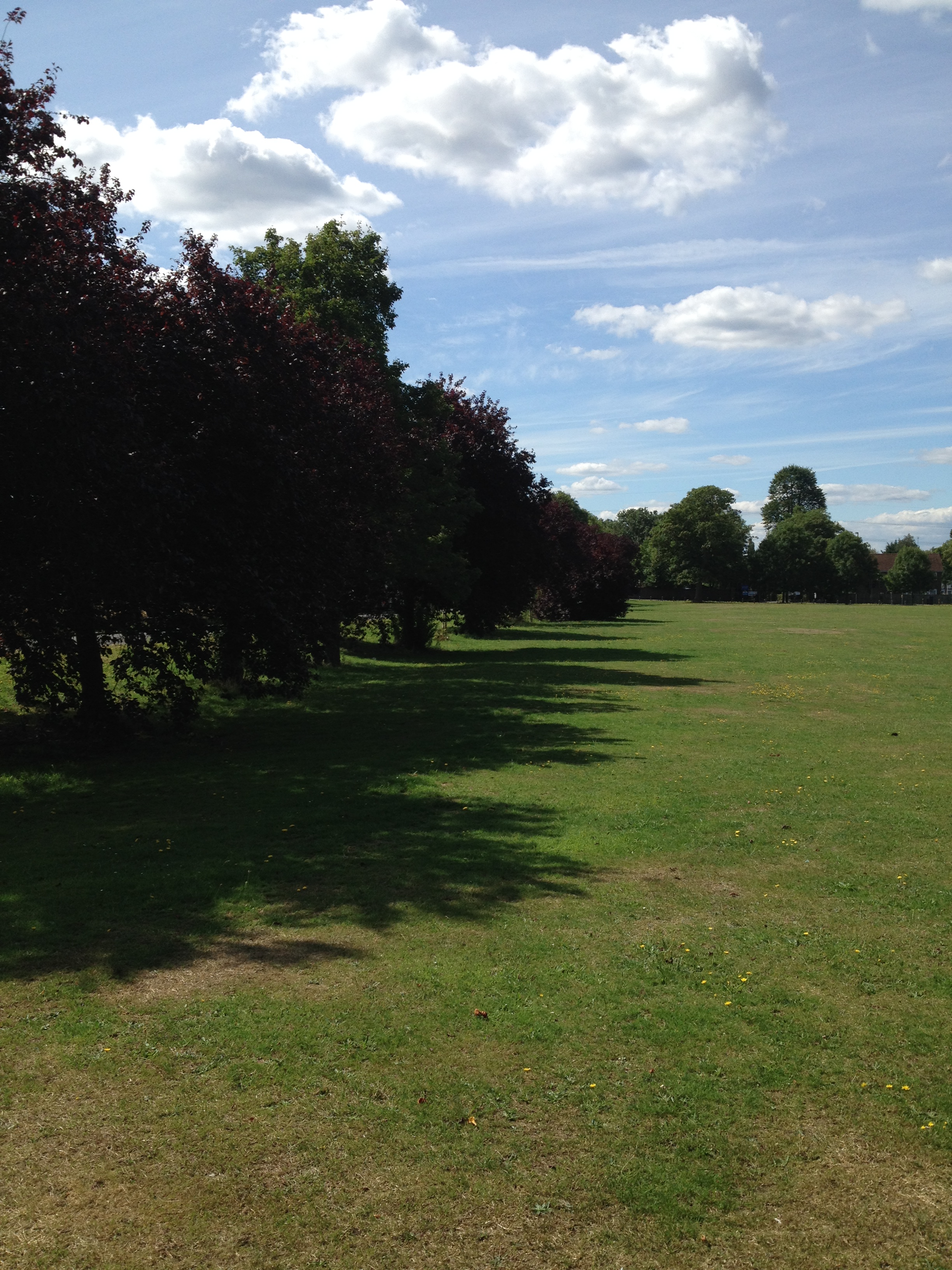
King George VI Avenue, on Cranmer Green, was created with the planting of 36 tulip trees and 36 purple-leaved plum trees. The number 36 was chosen to represent the year, 1936, of his becoming king, although his coronation was not until the following year, on 12th May, 1937.


On 29th December, 1936, the Town Clerk reported that he had attended a meeting of the Coronation Planting Committee with the mayor and the then Duchess of York about adopting some scheme of tree planting as a permanent memorial of the coronation, and that since then the Borough Council had been approached by resident Mr Athel R. Harwood, who had offered to contribute to any scheme of planting that the Council might think to adopt.

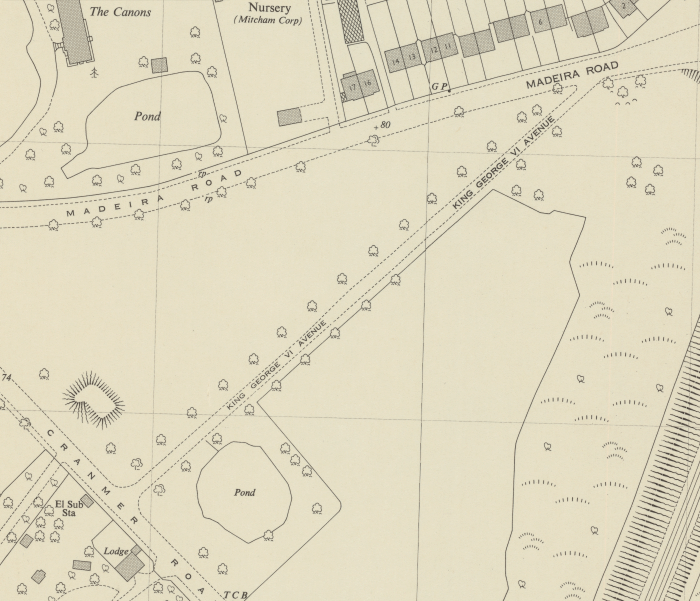
The Council then resolved that an avenue of trees be planted from the Blue House Bridge to the gates of the Wilson Hospital, and for other plantations of suitable trees to be arranged in the land between the avenue and the line of the Southern Railway.

On 7th April 1937 the Town Clerk report that Messrs. John Waterers, Son and Crisp, Ltd. of Bagshot, were carrying out the scheme in accordance with the arrangements approved by Mr A. R. Harwood, who contributed £50 (£3,100 in 2015) towards the cost.

looking south with avenue on left

looking south with avenue on left

looking north with avenue on the right

looking north with avenue on the right

The line taken by the road was that of the drive that approached the entrance of Cranmer House, shown as ‘Cranmer’ in this 1910 map. According to Eric Montague in his “Mitcham Histories : 11 The Cranmers, The Canons and Park Place“, page 4, this drive was originally lined with tall elm trees.

1950 Cranmer Green

1950 Cranmer Green

From the Royal Record of the tree planting:

An avenue of 36 purple-leaved plum (Prunus Pissardii) and 36 tulip trees (Liriodendron Tulipifera), with individual trees and clumps consisting of 11 purple Norway maple (Acer platanoides Schwedleri), 11 silver birch (Betula verrucosa), 1 copper beech (Fagus sylvatica cuprea), 1 weeping ash (Fraxinus excelsior pendula), 3 purple sycamore (Acer purpureum), 4 red-twigged lime (Tilia platyphyllos corallina), 7 red horsechestnut (Aesculus carnea), 3 beech (Fagus sylvatica), 6 lime (Tilia euchlora), 3 Norway maple (Acer platanoides), 1 Turkey oak (Quercus Cerris), 3 golden sycamore (Acer Pseudoplatanus Worlei), 1 scarlet oak (Quercus coccinea), 3 maple (Acer platanoides Drummondi), 12 white elm (Ulmis americana), 11 willow (Salix vitellina britzensis), 3 willow (Salix vitellina), 2 cherry (Prunus Sargentii), 7 cherry in variety, 7 willow (Salix babylonica ramulis aureis); planted by the Borough Council.


Maps are reproduced with the permission of the National Library of Scotland.