BURNT OUT.
MITCHAM GOLF CLUB PAVILION DESTROYED.
CARETAKERS’ NARROW ESCAPE.
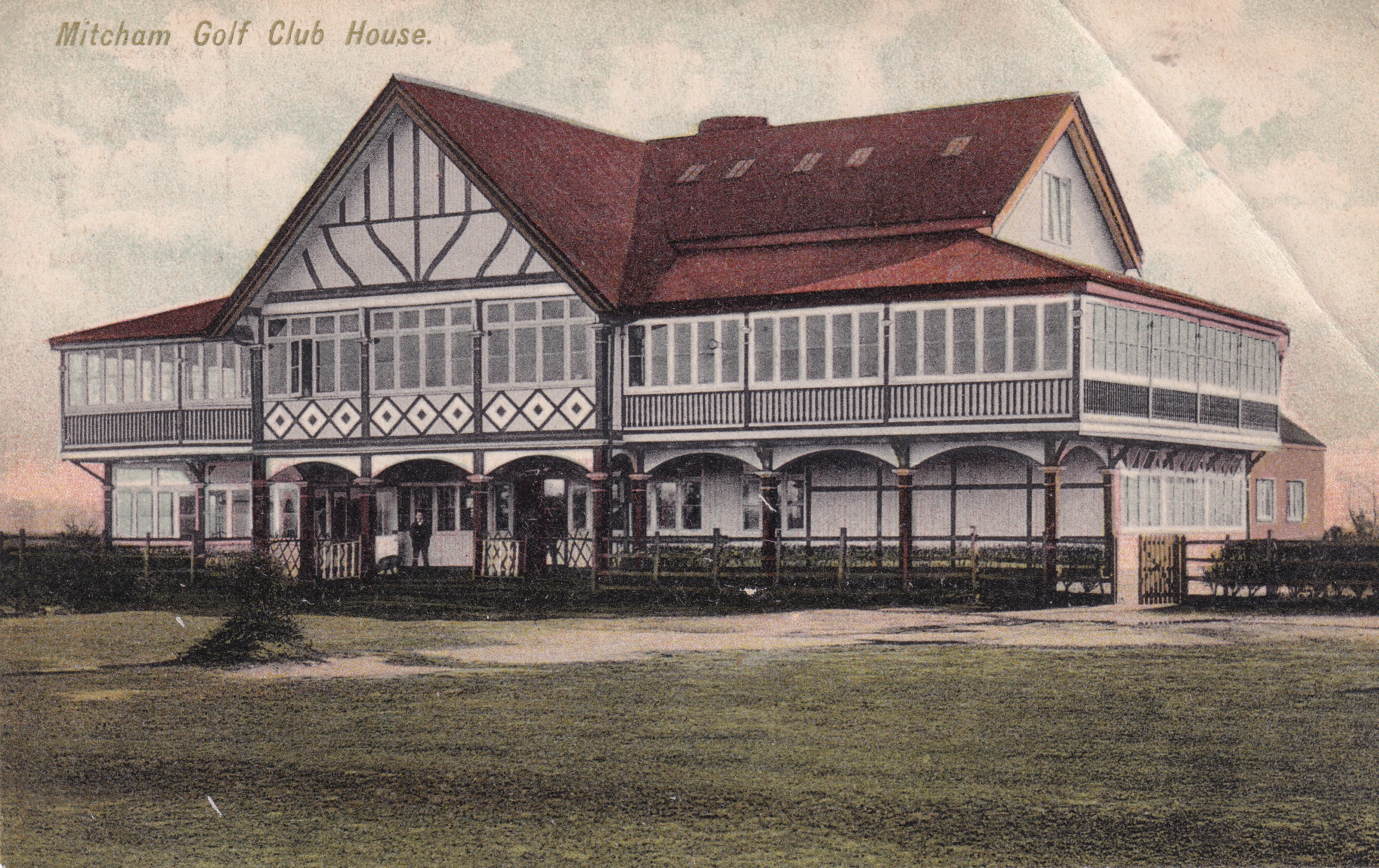
Mitcham Common Public Golf Club’s famous pavilion near Mitcham Junction Railway Station was burnt to the ground just after daybreak on Saturday morning.
It was a large and picturesque building of many rooms, built in 1892, mainly of wood, and it blazed like an enormous torch, providing a thrilling and rather splendid spectacle for the hundreds of train passengers passing through Mitcham Junction to London.
Mr. T. W. Pinfold, the recently appointed caretaker and course instructor, and his wife, who lived on the premises, discovered the outbreak just in time and fled from the furnace in their nightclothes after rescuing their cat and dog.
A thick fog enveloped the Common at the time and the smoke was held in it as in a net. When the blaze was at its height the flames could scarcely be seen from Carshalton-road. Mitcham Junction platforms made excellent grandstands for the scores of people waiting for trains, and some of them became so absorbed in the scene that they missed their trains. Motorists hurrying to town spared a few minutes to watch the fire. They left their cars outside Mitcham Junction till the road became blocked to passing bus traffic. But only for a short time.
THE GAME AS USUAL.
Before nine o’clock a number of golfers arrived by train and car with their kits on their backs and were startled to find the pavilion a heap of smouldering ruins. They were not long dismayed. A few packets of tickets were found and handed out as usual from the box near the pavilion, and while spurts of flame continued to attract the attention of the firemen play began on the course.
BRIGADE’S HANDICAP.
Mitcham Fire Brigade was called by telephone at 7.18. The pavilion was blazing furiously when they arrived, for a considerable breeze fanned the flames. They were handicapped to some extent by an insufficient water supply. Lengths of hose were carried over the footbridge at Mitcham Junction from hydrants on the south side. There was little chance of saving the building. In little more than an hour nothing of it remained except the tall brick chimney shaft bearing the date of its erection in stone, a bit of brick wall here and there and a huddle of twisted iron.
DANGER TO MITCHAM JUNCTION.
Passengers in trains calling at Mitcham Junction felt the intense heat, especially those alongside the north platform, where the wood fence was scorched. The station is separated from the pavilion by only a few yards on the Croydon side and the telegraph poles in the narrow grass verge between the north platform and the rear of the pavilion containing the workshops were charred. Railway officials stood by guarding the property while danger remained, and Chief Officer Wells concentrated the efforts of the firemen on the protection of the station.
RECENT RENOVATIONS.
Recently the pavilion has been repainted and thoroughly overhauled, and a new heating apparatus was installed. It was decorated in readiness for the Christmas season and all the Christmas stock of refreshments had just been laid in. One of the sufferers was the new manageress who lost personal belongings. Another was Mr. R. H. Pratt, the elderly professional, whose large stock of golf requisites, tools and material in the workshops in the basement of the pavilion was totally destroyed. The club also lost a valuable stock of clubs and balls and property of individual members was destroyed, too
CARETAKERS’ ESCAPE.
Mr. and Mrs. Pinfold, who were appointed caretakers about five months ago, lost everything they possessed, including Mr. Pinfold’s valuable collection of Indian curios. And they were lucky to escape with their lives. For a time Mrs. Pinfold was sheltered in the station master’s house at Mitcham Junction.
Telling the story of their escape to the “Advertiser,” Mr. Pinfold, still in his pyjamas under a heavy coat, said he had just got up and was walking along a corridor when he saw smoke coming through a door. He hurried downstairs to see if the heating apparatus was all right and found smoke thick in the basement and a boxroom on fire.
“I ran at once to warn my wife,” he said, “and then tried to get at the telephone, but I was cut off by the flames. So I ran to the station and telephoned from there, but found that the fire brigade had already been called. When I got back Mrs. Pinfold, half dressed, was trying to round up the cat and dog. We managed to save them after some trouble. They were frenzied and the cat I had to drag from death by its tail.”
Mr. Pinfold came from India, where he had been soldiering for many years. He was greatly concerned at the loss of his native works of art, one of which was an inlaid ivory table.
With the recent reorganisation of the Golf Club and the restriction of the links to the south side of the common, the staff was almost entirely changed. One of the first persons on the scene was Mr. J. B. Wallace, the secretary of the club, who was appointed about six months ago in succession to Capt. Smith, a one time member of Mitcham Urban Council. He lives at Whitford Lodge, close to Mitcham Court, the home of Sir H. M. Mallaby-Deeley, Bart., president of the club, and chairman of the Trustees of Mitcham Golf Course. Many of his books and personal belongings were destroyed.
Sir Harry Mallaby-Deeley visited the ruins on Saturday. Several years ago he presented the course, pavilion and everything connected with Prince’s Golf Club. of which he had been chief proprietor for many years, and which was one of the most exclusive golf clubs in the country, to the public, and the new Mitcham Common Public Golf Club was opened by Mr. Ramsay MacDonald, the Prime Minister.
The fire appears to have started in the basement close to one of the new boilers. Most of the damage is covered by insurance.
Many books and papers, some of historical interest, were burnt. Firemen found a cash box containing a considerable sum of money in silver and copper, a good part of which was melted — eloquent testimony to the fierceness of the fire.
While crossing the smouldering ruins Second Officer A. Tilley was struck in the face by the contents of a canister that burst with the heat and he was blistered a good deal.
All day Sunday a stream of people from all parts of London visited the scene of the fire. More golfers than usual were on the course and a brisk trade in new clubs, bags and balls was done by Mr. Pratt, the professional, who had secured a large quantity for the purpose.
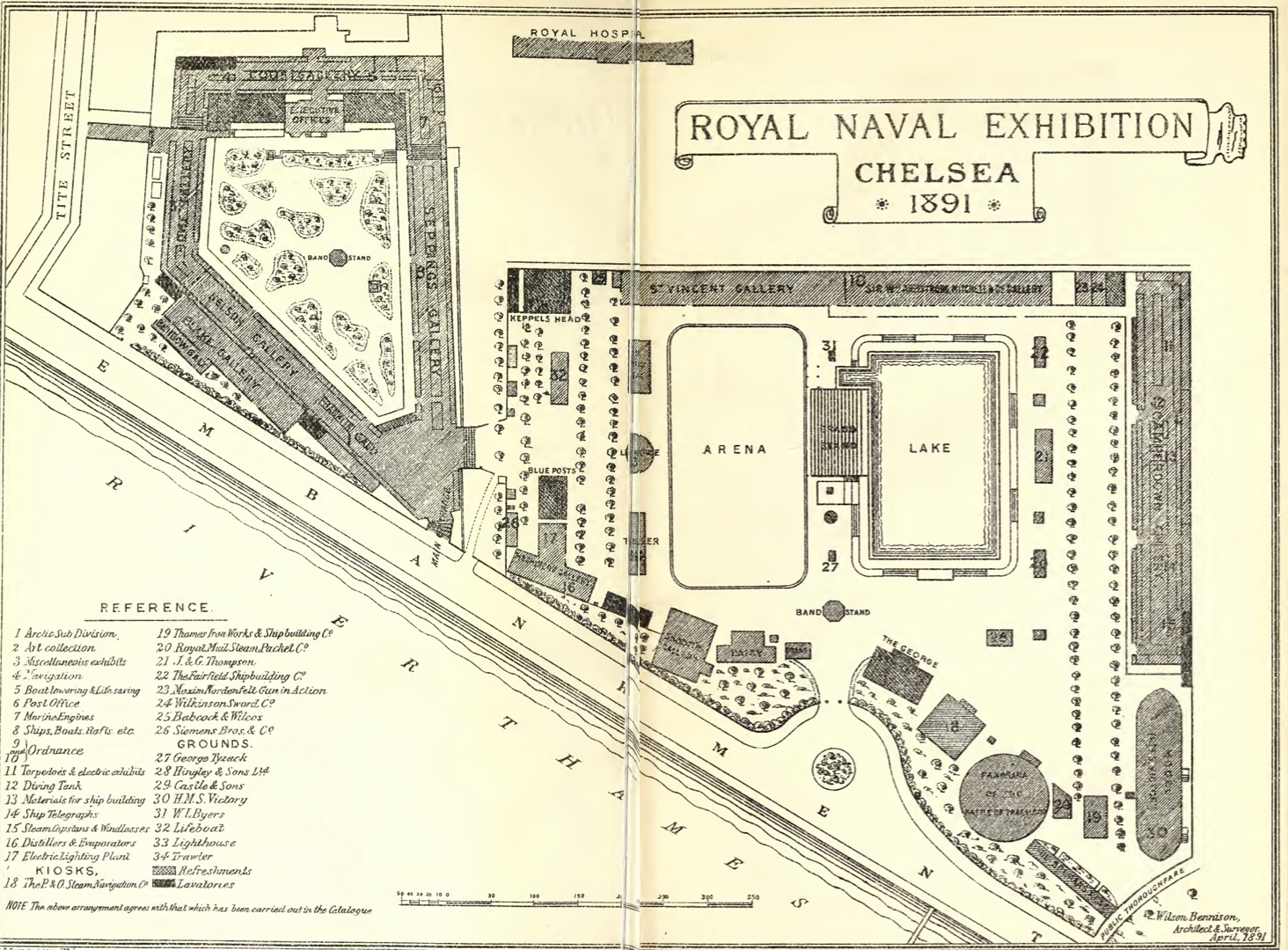
The clubhouse building was originally built for the Royal Naval Exhibition in 1891, which was in the grounds of the Royal Hospital in Chelsea.
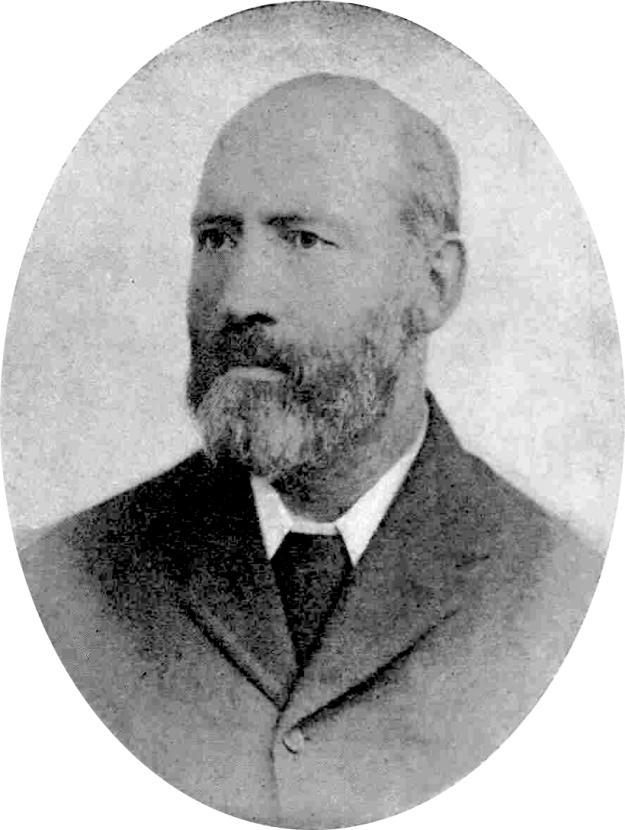
The architect of the building, and all of the Naval Exhibition was Wilson Bennison.
 Mitcham History Notes