Tag Archives: 1939

Coporal Peter Pushman

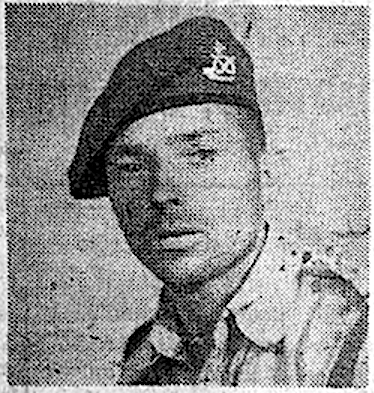
Corporal Peter Pushman, service no. 1454610. Photo from the Mitcham News & Mercury, 17th November, 1944.

Peter Pushman joined the Army before the war and was a gunner in 265 Battery of the 67th Field regiment of the Royal Artillery. He was a corporal in the 2nd Battalion, South Staffordshire Regiment, when he died at the Battle of Arnhem on 22nd September 1944.

He was 28, and was married to Sarah Charlotte (maiden name Todd), of Sandford-on-Thames, Oxfordshire. They lived at 17B Council Houses, Bullingdon Rural District, Oxfordshire, and were married in the first quarter of 1939. At no. 17 Council Houses was George R. Todd, born 1870, and likely Sarah’s father, a retired builder’s labourer. The Bullingdon rural district is now part of the South Oxfordshire District.

His parents were Bert and Elizabeth Pushman who lived in Love Lane, Mitcham. His father was a chimney sweep.

Sources

Casualty entry on Commonwealth War Grave Commission website.

The National Archives; Kew, London, England; 1939 Register, Reference: RG 101/2

General Register Office; United Kingdom; Volume: 3a; Page: 2147.

GB Historical GIS / University of Portsmouth, History of Bullingdon in South Oxfordshire | Map and description, A Vision of Britain through Time.

His death as reported in a local newspaper article


His grave is in the Arnhem Oosterbeek War Cemetery, reference 22. A. 19. in Holland. Photo taken 17th September, 2019.

Mitcham News & Mercury 20th October, 1944, page 1

DIED IN EPIC OF ARNHEM
Corporal Victim of Mortar Bomb

THE Arnhem epic has taken its toll of Mitcham’s gallant sons. The latest name on the Roll of Honour is that of Cpl. Peter Pushman, second son of Mr. and Mrs B. Pushman. Mr. Pushman is the old-established chimney sweep in Love-lane. Mitcham.

Cpl. Pushman, who was in the South Staffordshire Regt., was killed instantly by a mortar bomb. In a letter to his parents, the adjutant of his unit writes:—

“Cpl. Pushman died whilst giving his all, and his leadership and cheerfulness were an example to all those around him.”

Cpl. Pushman, who was in the Terriers before the war, went through Dunkirk and had returned to this country from Italy shortly before last Christmas. He was a bricklayer in civil life, and leaves a widow and one daughter. He was educated at Gorringe Park School.

Three serving brothers will mourn his death. Bert, the eldest, is serving with the Queen’s Royal Regt. in India. Frank is with the Royal Engineers on the Western Front, and Jim has recently been released from the R.A.F. to work in an aircraft factory.

From the 1939 Register on Ancestry, the occupants at 113 Love Lane were:

Bertie Pushman, married, aged 89, born 8 July 1889, chimney sweep (own account)
James A. Pushman, single, 20, born 2 Jan 1920, electric meter assembler
Daisy T. Pushman, single, 20, born 2 Jan 1920, electric meter assembler
Sidney Pushman, single, 18, born 2 Feb 1922, shop assistant
Frank Pushman, single, 23, born 31 July 1923, sheet metal driller
Joyce Pushman, single, 25, born 30 June 1925, cardboard box maker

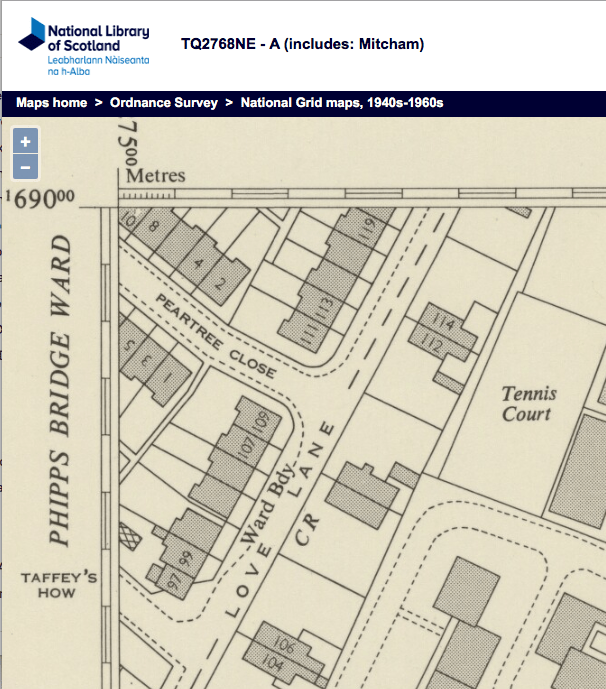
This OS map of 1954 shows number 113 as on the west side of Love Lane, the second house north of the corner with Pear Tree Close. It was built by Mitcham Borough Council as part of the Pear Tree Close development in 1934, and still exists in 2019.

1954 OS Map showing 113 Love Lane


Maps are reproduced with the permission of the National Library of Scotland.
Gladstone Road

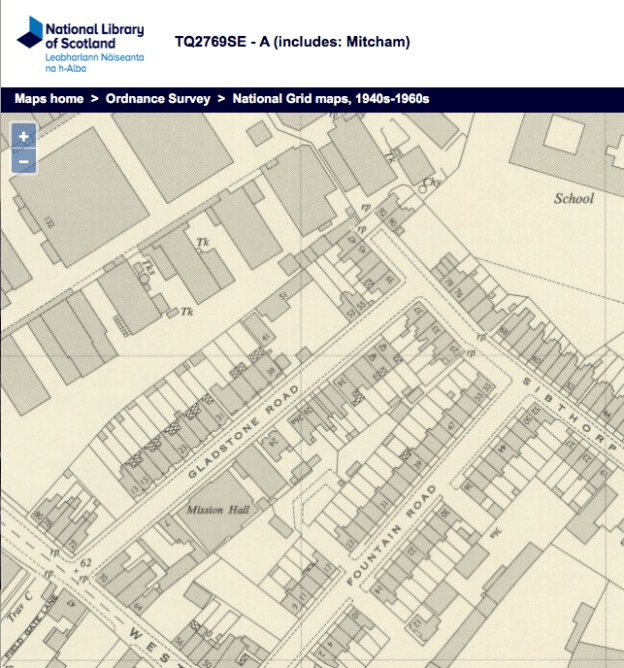
Road that was off the north side of Western Road, opposite Field Gate Lane. It linked to the north west end of Sibthorp Road, and was parallel to, and west of, Fountain Road. The Sadler Close housing estate was built over it, the name being kept for one of the blocks, Gladstone House.

1953 OS map

The Mission Hall seen in the map of 1953 was opened in 1939, see Merton Memories.

The Gladstone Road Youth Club met at the Mission Hall.

GLADSTONE ROAD YOUTH CLUB

This Club meets on Saturday evening during the winter from 7.30-9.30 p.m. and is for young people of both sexes from 13 3/4 years of age. Activities include table games, billiards, table tennis, etc., and every third Saturday country dancing is held. There is also a room where young people may sit and read, and a canteen which is run by two of the Club members. Club prayers are held at the close of the evening. Information can be obtained from Mr. Mac-William or Sister Dorothy at the Mission, Gladstone Road.

From the Mitcham Youth Handbook of 1949.


A viewer of my YouTube video Western Road Swings Yard and Ravenspring Works commented:

I have a personal and family interest in the area. My gran lived in 33 Fountain Road and I went to the Mission Hall in Gladstone Road Sunday School – as did most of the kids locally. I recall the time that one of the kids climbed into the upright piano.

Planning regulations may have been tighter or more lax in the Victorian era. Fountain Road had a pub, a shop and 3 yards as well as terraced houses. So some infrastructure as well as housing.

Swains yard, in my time, had a sawmill and I can still hear the ringing, singing sound as the blade cut through the logs.

The “ caravan “ illustrated is typical of several in the local yards. My gran told me that one was haunted and had to be exorcised.

Fountain Road had 3 yards. One had a stable and a green grocer who gave a mobile delivery service. Harry Gray, the fairground owner, had his main yard in London Road but once over wintered in the yard in Fountain Road.

Mention of the mineral water factory reminded me of a dingy shop in Western Road which had a device like a Sodastream. He would brew a flavoured fizzy drink for a penny using huge glass jars like those in chemist shops.

Further up was a tailor’s/repair shop with large letters saying ”As ye rip, so shall we sow”.

The Fountain pub was managed for many years by Johnny Brown who sold Smith’s crisps from time boxes. Only one flavour and the salt came in blue twisted paper.

Opposite was Maidments shop which sold everything including gas mantles for gas lights . His son was a famous speedway rider .


From Croydon Rural District Authority Minutes, JM Pitt applied to build four houses in the road :

21/10/1897:
– Mr JM Pitt of Mitcham to erect four houses Gladstone Road, Mitcham

Occupants from Directories

1925

Gladstone road, from Western road to Sibthorp road.

NORTH SIDE

13, Herbert J. PARLING
15, George SHEPPARD
17, Richard Francis SMITH
19, William NIGHTINGALE
21, Ernest William HARRIS
23, Daniel DIVES
25, John Robert SHEPPARD
27, Mrs COLLINS
29, Thomas George NIGHTINGALE
31, Frederick HARRIS

53, Frederick STANLEY
55, Arthur ANGLISS

SOUTH SIDE

42, John McRAE
40, Arthur Vinvent COOPER
38, Walter John FOSTER
36, Edward George HOWE
34, Walter D. HARRIS
32, William ATKINS
30, George BATTERS
28, Thomas HYDER
26, Mrs SKELTON
26A, Mrs ELLIOTT
The Cottage, Herbert GREEN
Salvation Army Mission Room
7, Robert ROSIER
Gladstone villa, John SUDDS, coal dealer

1904 to 1905

Gladstone road, from Western road to Sibthorp road.

NORTH-WEST SIDE

13, Ernest HARRIS
15, George SHEPPARD
17, Robert KILBEY
19, William NIGHTINGALE
21, Francis Jesse PARLING
23, John HUMPHREYS
25, Arthur Edward GRAY
27, William CLARK
29, George BRYANT
31, John Thomas NIGHTINGALE

53, Walter GEORGE
55, Charles OSBORNE

SOUTH-EAST SIDE

Salvation Army Barracks

1896
From Western Road to Sibthorp Road

NORTH WEST SIDE

Cromwell Terrace:

1, Joseph WHITEMAN
2, George SHEPPARD
3, George TOPLIFFE
4, Alfred GRAY
5, William MAYES
6, John HUMPHREYS
7, Edward Gray ARTHUR
8, John PILLINGER
9, George CRESSWELL
10, John Thomas NIGHTINGALE

5, Edmund BALL (coal dealer)

SOUTH EAST SIDE
Salvation Army Barracks

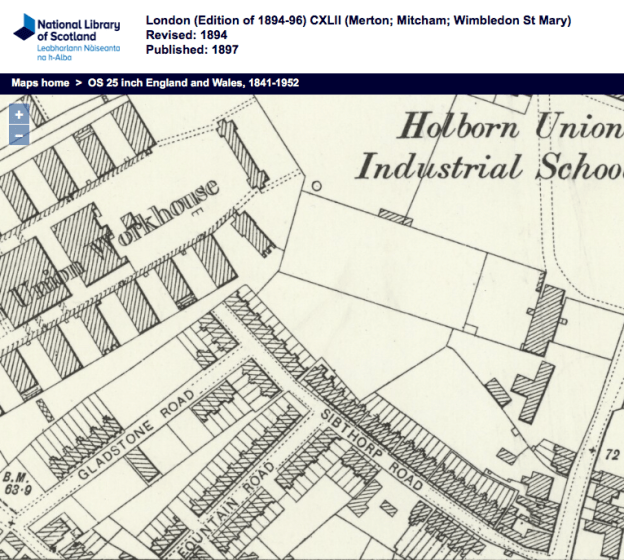
1894 OS map

There is no road shown on the 1866 OS map.


World War 1 Connections
Private William Richard Angliss

Private Henry James Collins

Private Harry George Sheppard


Maps are reproduced with the permission of the National Library of Scotland.