Tag Archives: 1966

Royal Six Bells

Pub that was at 222 High Street, Colliers Wood, Merton. Currently (2025) it is a restaurant.

Contents

Eric Montague Photos
Timeline
Newspaper articles
Maps
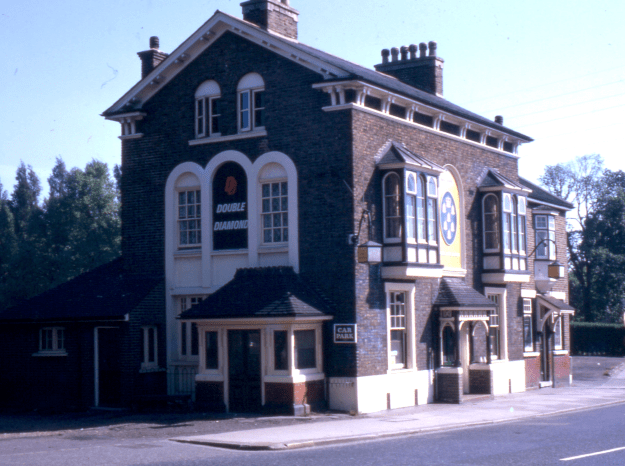
1966 photo by Eric Montague, reproduced by kind permission of the Merton Historical Society
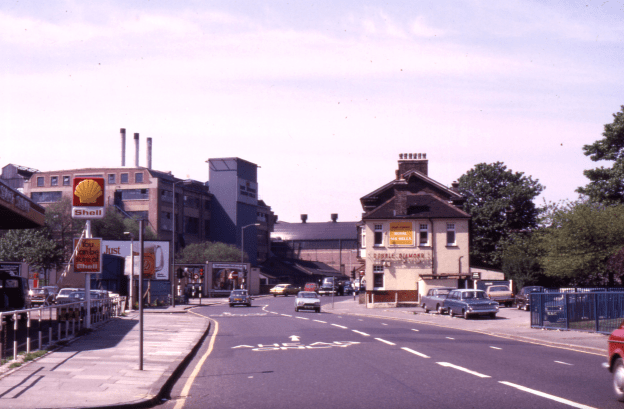
1974 photo by Eric Montague, reproduced by kind permission of the Merton Historical Society

I. ANCIENT FOUNDATIONS & EARLY ORIGINS

AD 43 – 400s | The Roman Road

  • Context: The site lies on Stane Street (A24), the Roman arterial road connecting London to Chichester.
  • Significance: This route established Merton as a focal point for transit for centuries to come.

Medieval Era | The Ecclesiastical Link

  • Context: The name “Six Bells” almost certainly refers to the peal of bells at the nearby St. Mary’s Church, linking the pub to the parish’s auditory and religious identity.

II. THE COACHING INN ERA (1750 – 1854)

1750 (July) | The First “Six Bells”

  • Event: Richard Hollamby insures a new building: “The Six Bells Alehouse, unfinished… at Merton Bridge”.
  • Structure: A two-storey, weatherboarded timber structure with a pantiled roof.

c. 1800 | A Vital Stop

  • Status: Recorded as a large public house in the possession of Mr. Newman.
  • Function: Located near the “Single Gate” tollgate, it served as a mandatory stop for travelers moving between rural Surrey and London.

1833 (May) | Community Hub

  • Event: Parish officers “beating the bounds” of Mitcham stop here for lunch, establishing it as a civic and social node.

III. THE VICTORIAN PUB & ROYAL PATRONAGE (1855 – 1994)

1855 | The Rebuild

  • Event: The original wooden inn is demolished (likely for water main works).
  • The current yellow stock brick building is erected in just three weeks by local builder James Bass to be ready for Derby Day.

Late 19th Century | The “Royal” Connection

  • Event: Renamed The Royal Six Bells.
  • Reason: The Prince of Wales (later King Edward VII) frequented the inn to change horses and rest while travelling to the Epsom Derby.
  • Clientele: It served a dual purpose: a high-class stop for Derby travelers and a “third space” for local mill and textile workers.

1891 | The Local Fabric

  • Context: Census records show the pub surrounded by a dense workforce living in cottages like “Barnes Cottages” opposite, emphasizing its role in the “industrious village”.

WWII (1939–1945) | Civil Defense

  • Adaptation: The nearby Wandle Park swimming pool (behind the pub) is converted into a communal air-raid shelter, integrating the pub’s geography into local defense.

IV. IDENTITY CRISIS & DECLINE (1995 – 2007)

c. 1995 – 2000 | “Riverside”

  • Rebrand: Name changed to Riverside to highlight proximity to the River Wandle.

c. 2000 – 2005 | “Baobab”

  • Rebrand: Renamed Baobab, adopting a thematic/modern branding concept.

2005 – 2007 | “Blue”

  • Rebrand: Renamed Blue, attempting a minimalist lounge/bar aesthetic to attract younger clientele.

V. CATASTROPHE & REBIRTH (2007 – Present)

2007 (July 1) | The Great Flood

  • Event: Severe flooding of the River Wandle causes significant damage to the building.
  • Outcome: The pub closes its doors and remains boarded up for several years, ending its life as a licensed public house.

2011 (September) | Delhi Heights

  • Rebirth: The building is repurposed and opens as Delhi Heights, an Indian restaurant.

2015 – Present | Istanbul Meze Mangal

  • Current Status: The site operates as Istanbul Meze Mangal, a Turkish restaurant.
  • Legacy: The building remains on the Local List of Buildings of Historical or Architectural Interest, preserving the Victorian streetscape.

Newspaper Articles
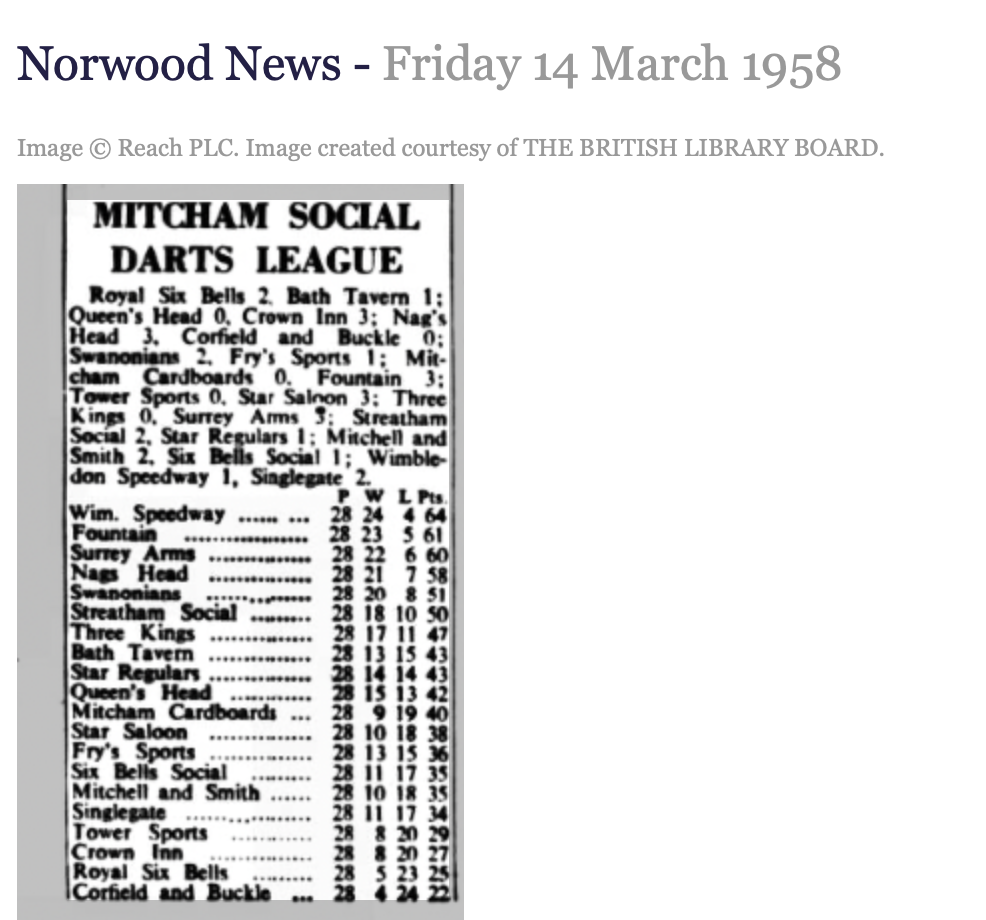
Norwood News – Friday 14 March 1958

Croydon Express – Saturday 17 December 1910

MERTON. A.O.D.—The Merton Abbey Lodge of the Ancient Order of Druids, which holds its meetings at the “Royal Six Bells,” High-street, Collier’s-wood, Merton, gave an “open night” at that hostelry on Friday last, and a large and representative company Of Druids and their friends attended, amongst others being members of the Wimbledon, Merton,and Mitcham Councils. Noble Arch Birch presided, and Vice Arch Owen occupied the position of vice chairman. A splendid pro gramme had been arranged under the direction of P.A. Reeves, and the harmony was continued till a late hour. During the evening P.A. Nawton. the Patriarch of the Lodge, gave a brief address on “Druidism and its objects—justice, philanthropy, and brotherly love.”

Ordnance Survey maps are reproduced by permission of the National Library of Scotland, reuse CC-BY.
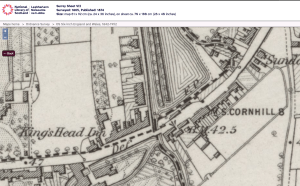
1865 OS map
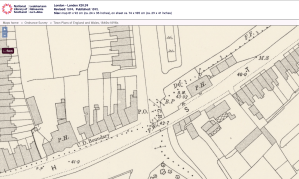
1894 OS map
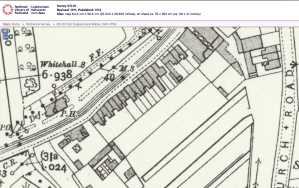
1911 OS map
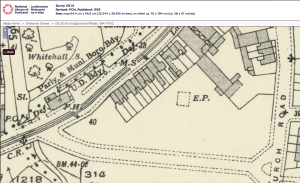
1934 OS map
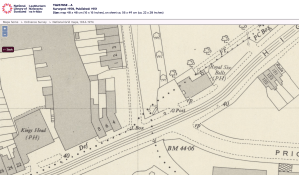
1950 OS map
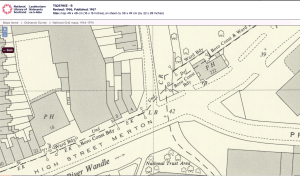
1966 OS map
Tamworth Lane

Road that runs from the railway line at the Eastfields level crossing to Manor Road.

Scroll down or click the links to

Houses
Businesses
Newspaper Articles
Industry
World War 2

Maps reproduced by permission of the National Library of Scotland, reuse CC-BY.

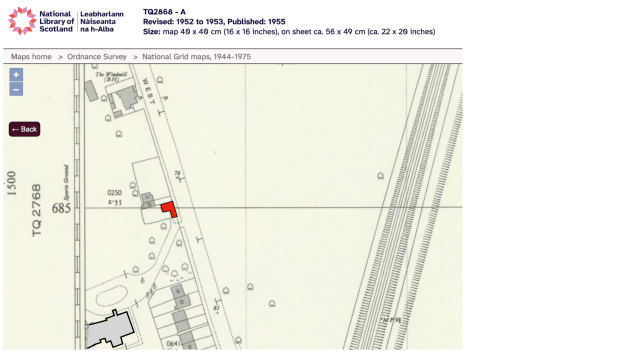
1952 OS map showing numbers 2 to 20 at the western end of the road, next to the Eastfields level crossing.

Houses

The following is from Source: Mitcham Histories 3 Pollards Hill, Commonside East and Lonesome by E.N. Montague.

Numbers 2 to 8 were built about 1870, and were owned by the Allen family. They were known as the Sherbourne Cottages. No. 2 was known as Sherbourne House. These houses were blighted by the M23 motorway extension scheme and so were earmarked for demolition. Although the motorway scheme was abandoned, they were demolished in the 1980s.

This photo appears in Eric Montague’s book Mitcham Histories : 3 Pollards Hill Commonside East and Lonesome, on page 92.

Photo taken by Eric Montague in 1974. Reproduced by kind permission of the Merton Historical Society. Image reference mhs-em-ph-l-12

In the 1925 street directory, the houses were numbered 1 to 4, Sherbourne Terrace:

1, Miss ALLEN
2, Frank SMITH
3, Arthur Edward HOBBS
4, Henry James MILLS

1952 OS map

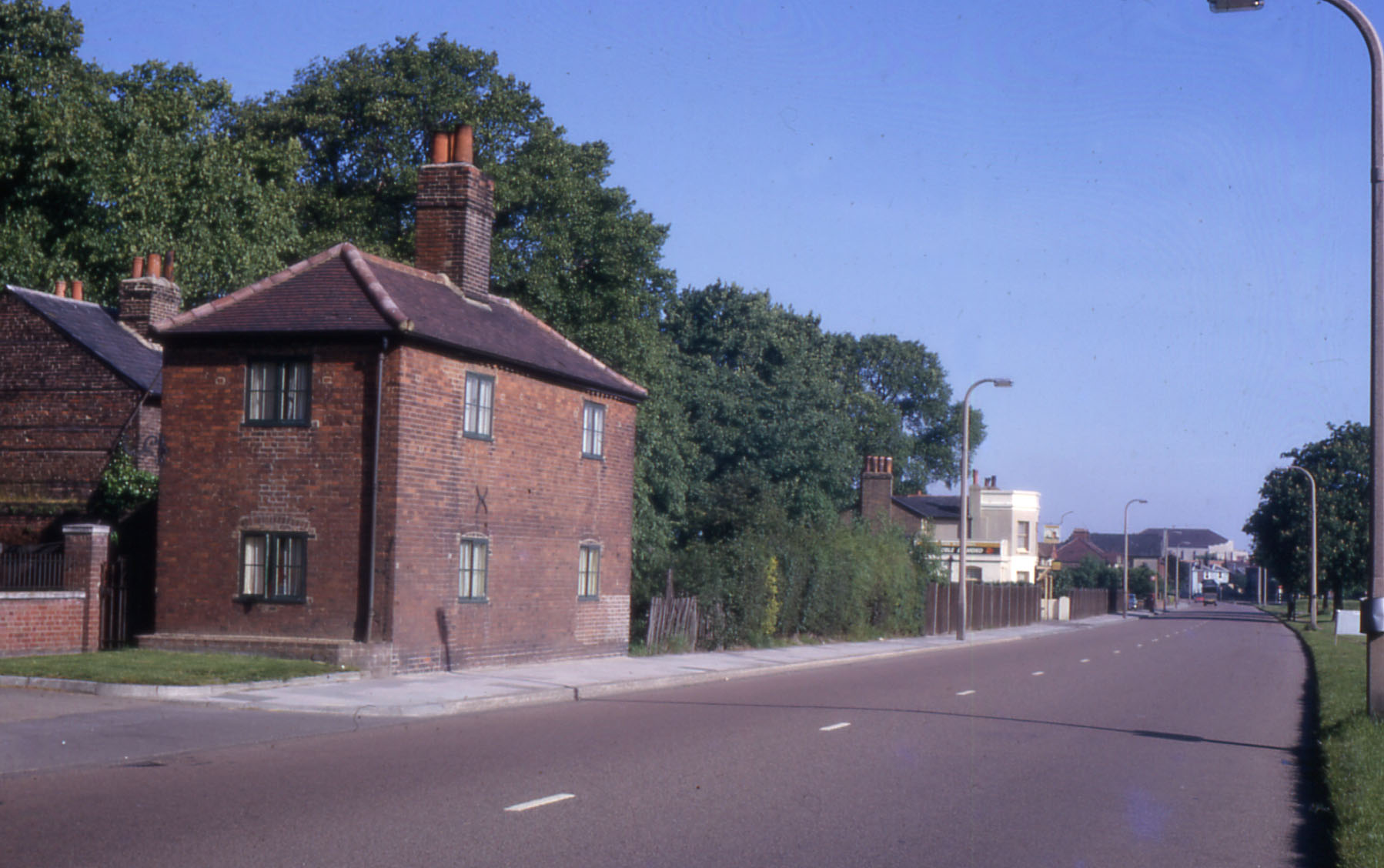
Photo taken by Eric Montague in 1966. Reproduced by kind permission of the Merton Historical Society. Image reference mhs-em-ph-l-7

The photo appears in Eric Montague’s book Mitcham Histories : 3 Pollards Hill Commonside East and Lonesome, on page 93.

Number 30 was also owned by the Allen family.

The houses between Cedars Avenue and Tamworth Park, no.s 142 to 208, as shown on this 1952 OS map, were built by the Tamworth Park Construction Co., which is why they are of the same design as those at the northern end of Tamworth Park.

1952 OS map

On the north side of Tamworth Lane, numbers 231 to 241 and 243/5 were originally called Tamworth Cottages. These are now the only remaining late 19th century artisan’s houses left in this road.

Left to right: no.s 243 to 241. From Google Street View

No.s 243 and 245. From Google Street View.

1910 OS map

In the 1925 street directory, these houses were numbered 1 to 8 from east to west, hence no, 1 is now 245 and no. 8 is 231. The occupants in 1925 were:

(231) 8, James ROGERS
(233) 7, Mrs HEATH
(235) 6, Mrs COURTNELL
(237) 5, Charles Francis COURTNELL
(239) 4, Mrs COAD
(241) 3, Patrick McCARTHY
(243) 2, Robert William HAWKINS
(245) 1, Mrs HICKEY

Most of the houses along Tamworth Lane were built between the world wars. This ad from 1934 refers to those built by Crouch as the Crouch estate:

Streatham News – Friday 24 November 1933. Image © Successor rightsholder unknown.

These Crouch houses had an extra large kitchen with fitted cabinet with many cupboards, and recess for gas stove.

Streatham News – Friday 24 November 1933. Image © Successor rightsholder unknown.

Also in 1934, this ad from the builder Wates, refers to the Tamworth Gardens Estate:

Ad from the Streatham News – Friday 22 June 1934
Image © Successor rightsholder unknown.

From the curved shape of the bays at the front, and the layout of windows at the side, my guess is that these houses were numbers 51 (at the corner with Acacia Avenue) to number 89.

No. 83 and 85 part of the Tamworth Gardens Estate in Tamworth Lane. Photo taken 2008 by Google Street View.

Businesses

On the corner of the north side of Tamworth Lane and Manor Road stood the Horse & Groom pub until it was demolished in the late 1980s.

From the 1954 phone book:

No. 42, F. WILCOX, Fish fryer. MIT 4677
No. 48, L.M. LOVE, Greengrocer. MIT 2510
No. 297, J. HAWKER & Sons, Butchers. MIT 1545
No. 301, H.J. HIGHMAN, General stores. MIT 4735

Newspaper articles

The Gables, from Google Street View, 2014

The Gables, 112 Tamworth Lane, was converted into 18 flatlets in 1960 as referred to in the following articles.

Mitcham News & Mercury 6th February 1959, page 9.

£20,000 flats plan.

A tender for the conversion of a house in Tamworth Lane, Mitcham, into 18 one-room flatlets for elderly people, has been accepted by Mitcham Council at a cost of £20,000.

Mitcham News & Mercury 13th May, 1960.

First tenants for new flatlets.

Work will be completed Saturday 14th May 1960 on The Gables, Tamworth Lane, Mitcham, where 18 old peoples’s flatlets have been built. The first tenants are expected to move in pm Thursday.

The flatlets have been built for old people to look after themselves. They consist of a bed-sitting-room, a kitchenette, and couples share the bathrooms and toilets.

Streatham News – Friday 20 October 1961 Image © Successor rightsholder unknown

Industry

The Crown Chemical Works of Typke & King was on the south side of Tamworth Lane, between Barnfield Avenue and Marlowe Square.

1894 OS map

1894 OS map georeferenced with current OpenStreetMap

Hall & Co., gravel merchants, are the last entry in the 1925 street directory, see the gravel pit in the above 1894 OS map.

World War 2

Civilian deaths due to enemy action during the war. Click a name to go to the entry on the Commonwealth War Grave Commission website.

17th September 1940
No. 162, Dorothy Ruby PALMER, aged 37.

5th November 1940
No. 91, Florence Kate SIPPLE-ASHER, aged 46; Michael Joseph SIPPLE-ASHER, aged 49; Michelle Paula SIPPLE-ASHER, aged 19.

Victory Day Party

From the Mitcham News and Mercury, 22nd June 1945